Often yes, but not always with the carrier or on the terms you would choose. No California law bars insuring a house with knob and tube, and no state rule tells carriers how to treat it, so each insurer decides. Homeowners report everything from no questions at all to declines, non-renewals and coverage offered on condition that the wiring is replaced within a short period.
Fog City SF Knob and Tube manages electrical inspections for insurance and knob and tube replacement in San Francisco and the East Bay, with the work carried out by licensed and insured California C-10 electrical contractors. It can document what is live in a house and replace what needs replacing; no contractor can promise what an insurer will decide afterward. An electrical inspection for insurance is the starting point when a carrier has already asked.
Why this became a Bay Area issue
For years knob and tube was a line in an inspection report. That has changed. A Bay Area insurance broker told ABC7 News that if knob and tube goes on an application, “we are going to get declined,” and the same report quoted him advising owners not to wait until they are canceled. The San Francisco Chronicle has reported that older homes are more likely to be non-renewed, especially if they still have outdated electrical wiring. The City of Berkeley’s own energy ordinance materials state that “many insurance providers will not issue or renew homeowner policies for houses with active knob and tube wiring.”
San Francisco’s permit records show the same pressure. Of 2,023 electrical permits filed from January 2016 to October 2026 whose descriptions name knob and tube, 30 cite an insurer. Their wording is direct: one describes a “like for like insurance requirement to replace existing knob & tube to nm cable”; another says the owner’s insurance company is requiring replacement of the knob and tube and a Federal Pacific main breaker before it will write a policy; a third says the insurer “advised owner to make it redundant and disconnect.” Permits naming knob and tube rose from 104 filed in 2023 to 564 in 2025, a rise that coincides with this pressure, though permit wording alone cannot prove the cause.
The California FAIR Plan’s own data shows residential policies in San Francisco ZIP codes rising from 335 in September 2021 to 1,861 in September 2025. The FAIR Plan gives no reasons for that growth, and it covers far more than wiring, so it is context for a tighter market, not a knob and tube statistic.
How carriers find out
Homeowners report three routes. Applications ask, sometimes directly, whether the house has knob and tube or a fuse box. Some carriers send a third-party inspector who photographs the panel and visible wiring. And sale disclosures and inspection reports put it in writing for the next carrier to read.
Homeowners also report that outcomes depend on the carrier and on whether knob and tube is disclosed. Answer application questions accurately. A policy written on a wrong answer is a weak policy to rely on, and the better path is to change the answer: by testing, by retiring dead runs properly, or by replacing what is live.
What insurers tend to ask for
No carrier’s underwriting guideline is public, so this is what owners and permit records describe, not a rule:
- Replacement within a set period. Homeowners report coverage offered on condition that the wiring is replaced within a short window, around 60 days in several accounts, sometimes measured from the close of escrow.
- An electrician’s report. Owners describe insurers asking a licensed electrician to inspect and report which circuits remain on knob and tube and their condition, including whether old circuits have been altered.
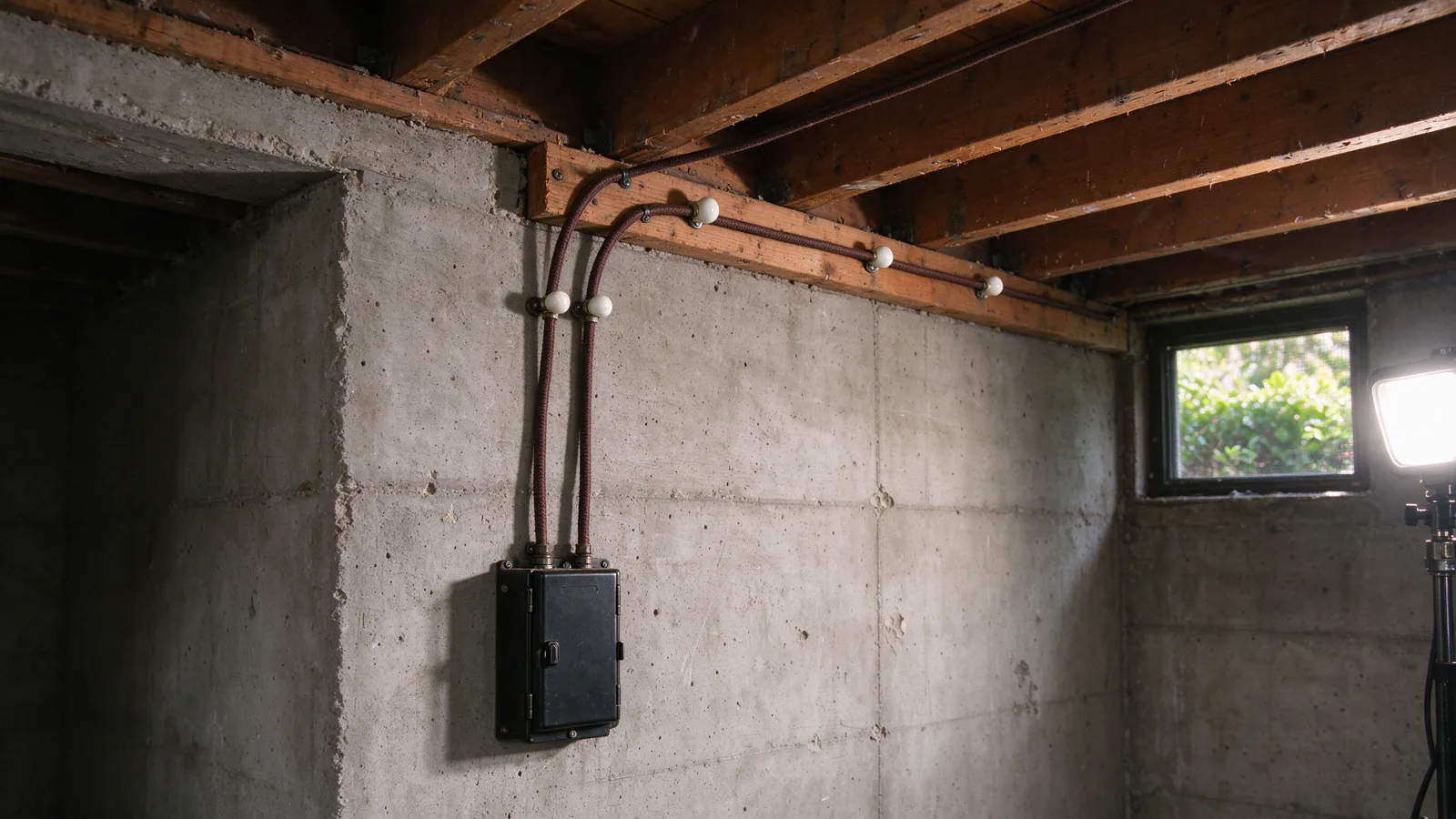
- Disconnection. Some carriers accept knob and tube that has been de-energized and left in place, which is why the difference between active and abandoned runs matters so much.
- Proof of permitted work. A final inspection and the Certificate to Connect Current, DBI’s Green Tag, show the replacement was inspected; the San Francisco electrical permit guide explains what that record does and does not prove.
Coverage is not acceptance: who pays for the work
People ask two different things when they ask whether insurance “covers” knob and tube. The first is whether a carrier will accept the house. The second is whether a policy will pay to replace the wiring.
On the second, the San Francisco permit records describe insurers requiring owners to replace or disconnect knob and tube to obtain or keep a policy, which leaves the cost with the owner. Whether a policy would respond to damage caused by an electrical failure is a question for that policy’s wording, and it is separate from whether the carrier will renew. Ask your carrier in writing and keep the answer.
For the cost itself, the cost guide gives a typical San Francisco range of $20,000 to $50,000 or more for whole-house replacement in a single-family home, electrical scope with permits. For income-qualified households, BayREN reimburses up to $2,000 to remediate active knob and tube as part of an EASE Home project; the BayREN rebate guide has the conditions.
Your rights on cancellation and non-renewal
The California Department of Insurance’s residential guide sets out the rules. After a policy has been in force for 60 days, an insurer may cancel only for reasons set by law, which include physical changes in the insured property that increase a hazard insured against. A non-renewal requires written notice at least 75 days before the policy expires, and both cancellation and non-renewal notices must state the reason. For people struggling to find coverage, the Department points to its Home Insurance Finder and to the surplus lines market.
Seventy-five days is enough time to act if you start early. A test of every circuit through a knob and tube inspection, a written scope and, where the house is mostly abandoned already, proper disconnection can sometimes be finished within that window; a whole-house rewire with permits and plaster work may take longer, which is worth telling a carrier or broker up front.
The FAIR Plan as a bridge
The California FAIR Plan describes itself as the insurer of last resort “when no other option is reasonably available.” A broker must first make a diligent search of the traditional market. FAIR Plan policies cover basic fire, and owners fill the gaps with a Difference in Conditions policy from another insurer. The FAIR Plan publishes no statement on knob and tube eligibility. Homeowners report using it as a bridge: a FAIR Plan fire policy plus a separate policy until the wiring was replaced, then a return to the regular market.
Building an insurance file
Whatever a carrier decides, a clear file makes the conversation shorter:
- A circuit-by-circuit record of what is live on knob and tube, what has been retired and what is modern, from a knob and tube inspection.
- Photos of the panel and of attic and basement runs, taken without disturbing the wiring.
- The scope and timeline for any replacement, with the permit numbers once filed.
- The final inspection and Green Tag when the work is done, plus the updated panel directory.
- A written statement of anything left, because a partial job that leaves one circuit on knob and tube should say so.
Insurer asking about your wiring?
Get every circuit tested and documented first, so the carrier sees what is actually live and what replacing it would involve.
Buyers, sellers and landlords
Insurance now shapes San Francisco sales, because a lender needs a policy before it funds a loan. The buying guide covers the contingency period and the selling guide covers disclosure. Owners of flats face the same questions per building, with one electrical permit per unit; apartment building rewiring covers phasing around tenants.
With an insurer’s letter in hand, call (628) 296-7628 or request an estimate with the deadline and what the carrier has asked for.