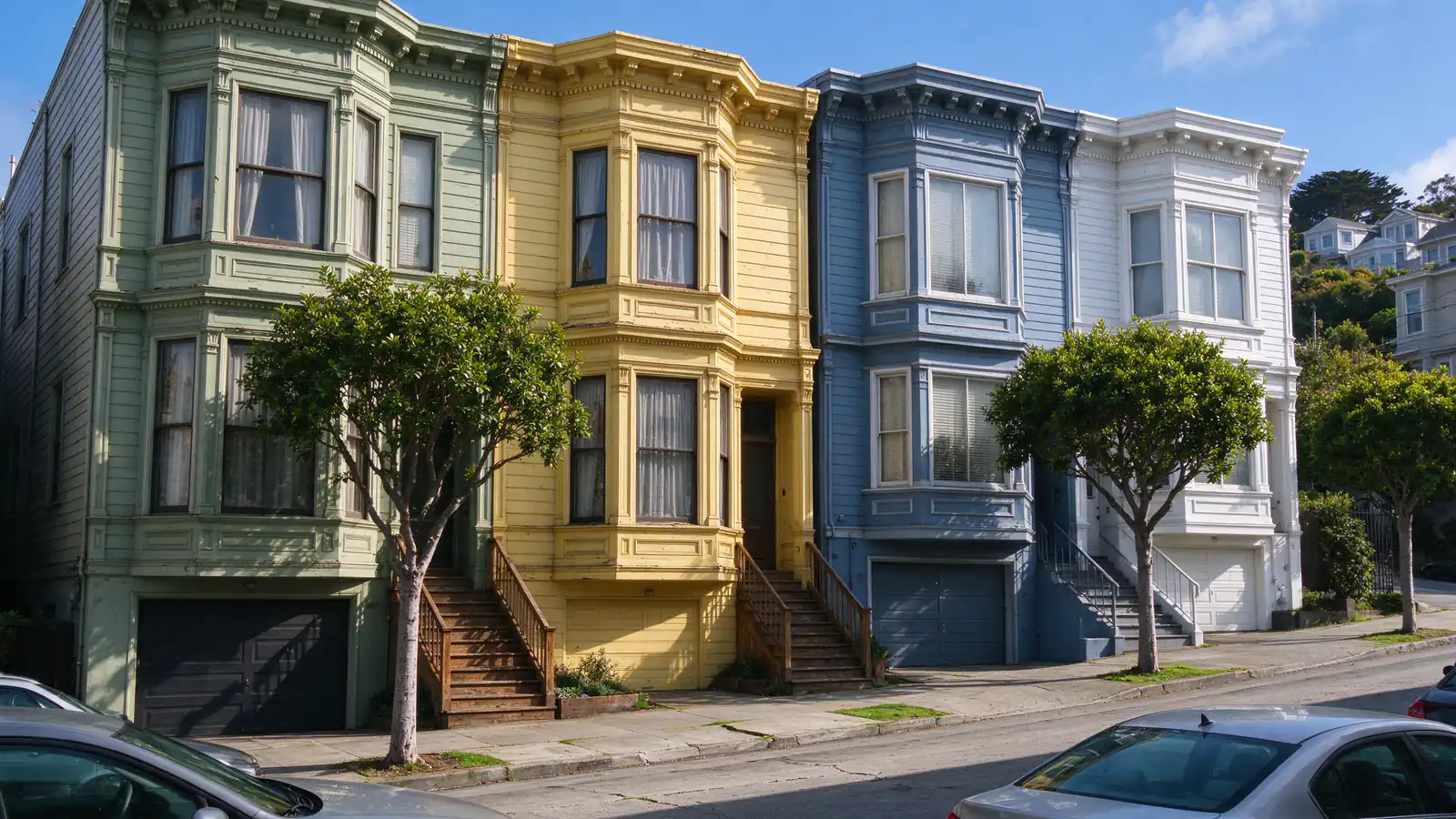
Attached Victorian and Edwardian flats. About 45% of San Francisco homes were built before 1940.San Francisco and the East Bay
Knob and tube replacement in San Francisco
An insurer's letter, an inspection report or a remodel that opens a wall usually starts it. Fog City SF Knob and Tube replaces knob and tube wiring in San Francisco and the East Bay, planned circuit by circuit around plaster and lath, with a DBI permit and inspection before anything is closed up.
San Francisco and the East Bay: Berkeley, Oakland, Alameda and Piedmont. Single-family houses, flats, apartment buildings and storefronts with flats above.
- An electrical permit from DBI before new wiring goes in, then a pre-cover and a final inspection.San Francisco Electrical Code 89.127
- A separate permit for each dwelling unit, except in single-family (R-3) buildings.DBI fee schedule
- Only owner-occupants of a single-family home may pull their own electrical permit.SF Department of Building Inspection
- No insulation around concealed knob and tube without a licensed electrical contractor's certification.California Electrical Code 394.12
- Up to $2,000 toward active knob and tube for income-qualified PG&E customers in an EASE Home project.BayREN
Four ways knob and tube turns up in a San Francisco house.
Your insurer asked about the wiring
Bay Area brokers have told reporters that knob and tube on an application can mean a decline. An inspection that separates live circuits from abandoned ones gives you something specific to send back. The insurer still makes its own decision.
A home inspection flagged it
Since January 1, 2026, California sellers must give buyers a statement advising an electrical inspection. A general inspector can see knobs in the attic but not what is live inside the walls. Testing each circuit turns the note into a scope and a number.
A remodel or new insulation exposed it
Opening a kitchen wall or clearing an attic for insulation can expose wiring nobody knew was there. California's electrical code does not let insulation envelop concealed knob and tube without a certification, so the wiring decision comes first.
Two-prong outlets, flicker or a warm cover plate
These have several possible causes, and knob and tube is only one of them. A warm outlet or a burning smell is a reason to stop using that circuit and have it checked. A three-prong outlet on old wiring does not prove a ground.
From one circuit to the whole house.
Every job starts by finding out what is still live. Knob and tube replacement, which some people call knob and tube rewiring, means replacing the old branch circuits themselves, not just the outlets on them. Most jobs also bring the system up to date: grounded circuits, arc-fault and ground-fault protection where the code requires it, more circuits for kitchens and laundry, and a panel that can carry them.
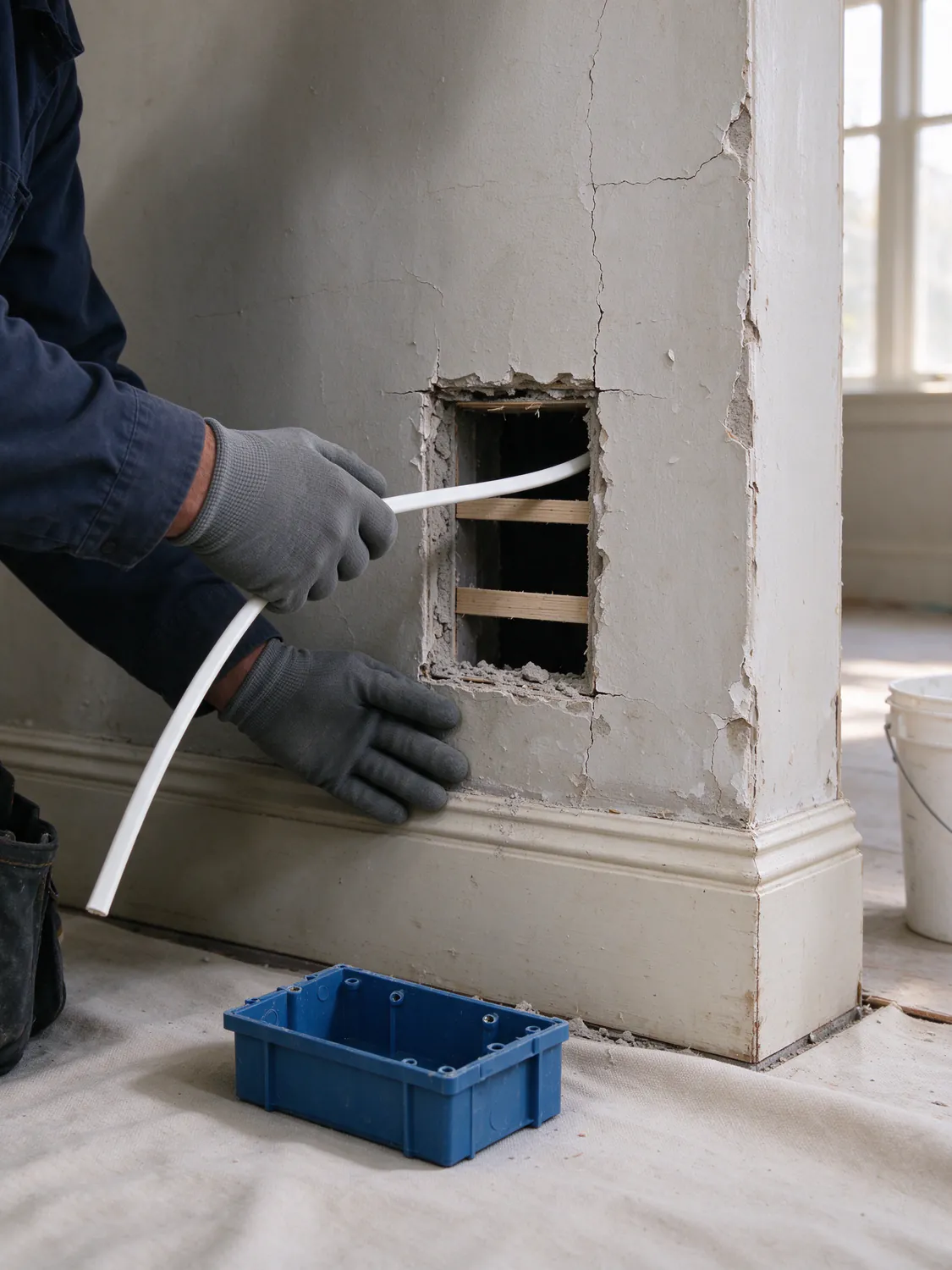
Whole-house rewiring
Every branch circuit replaced and the panel sized for the new load, planned floor by floor around how the house is used.
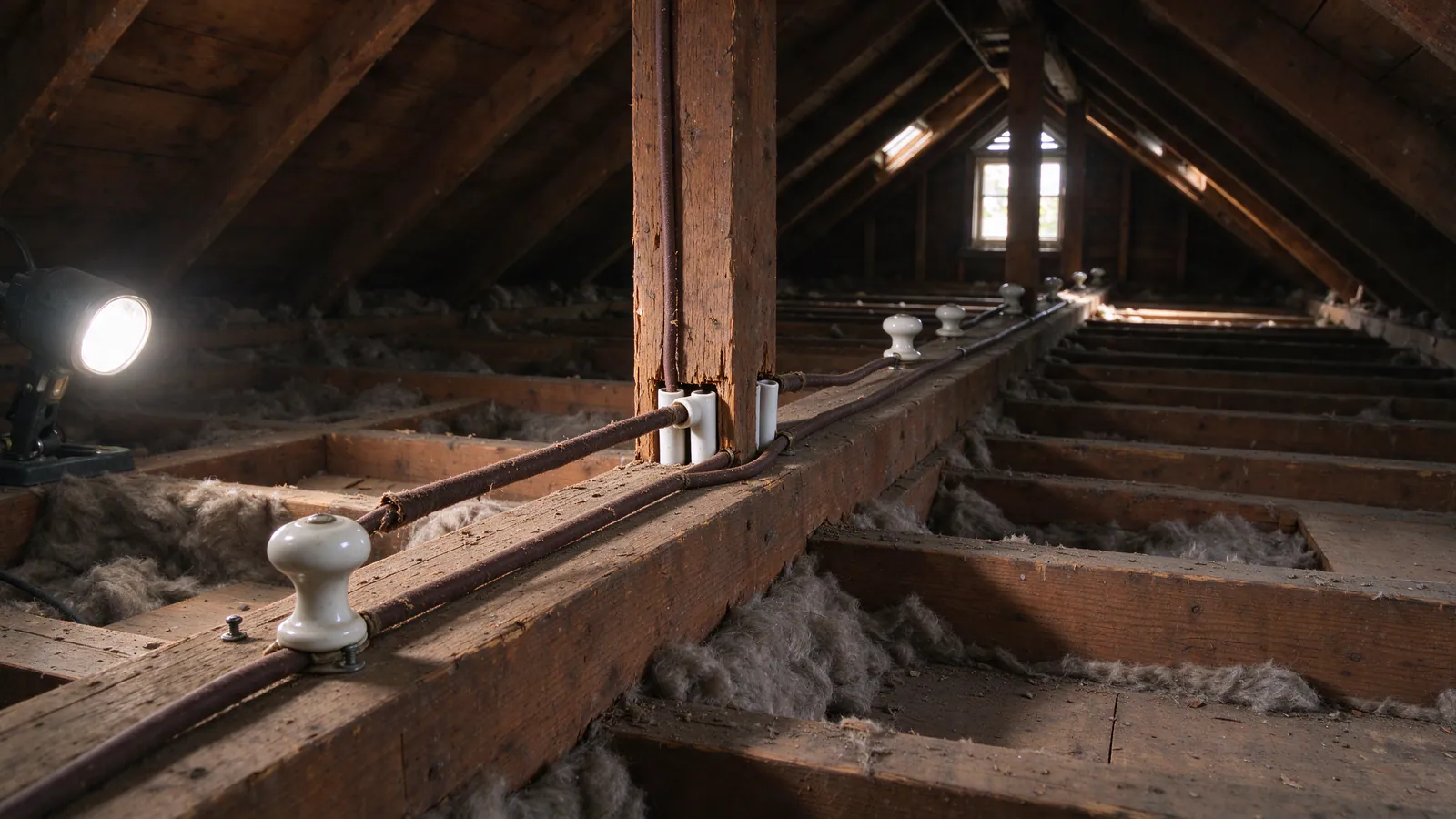
Knob and tube inspection
Which circuits are still live, where they run and what they touch, written up for an insurance, sale or insulation decision.
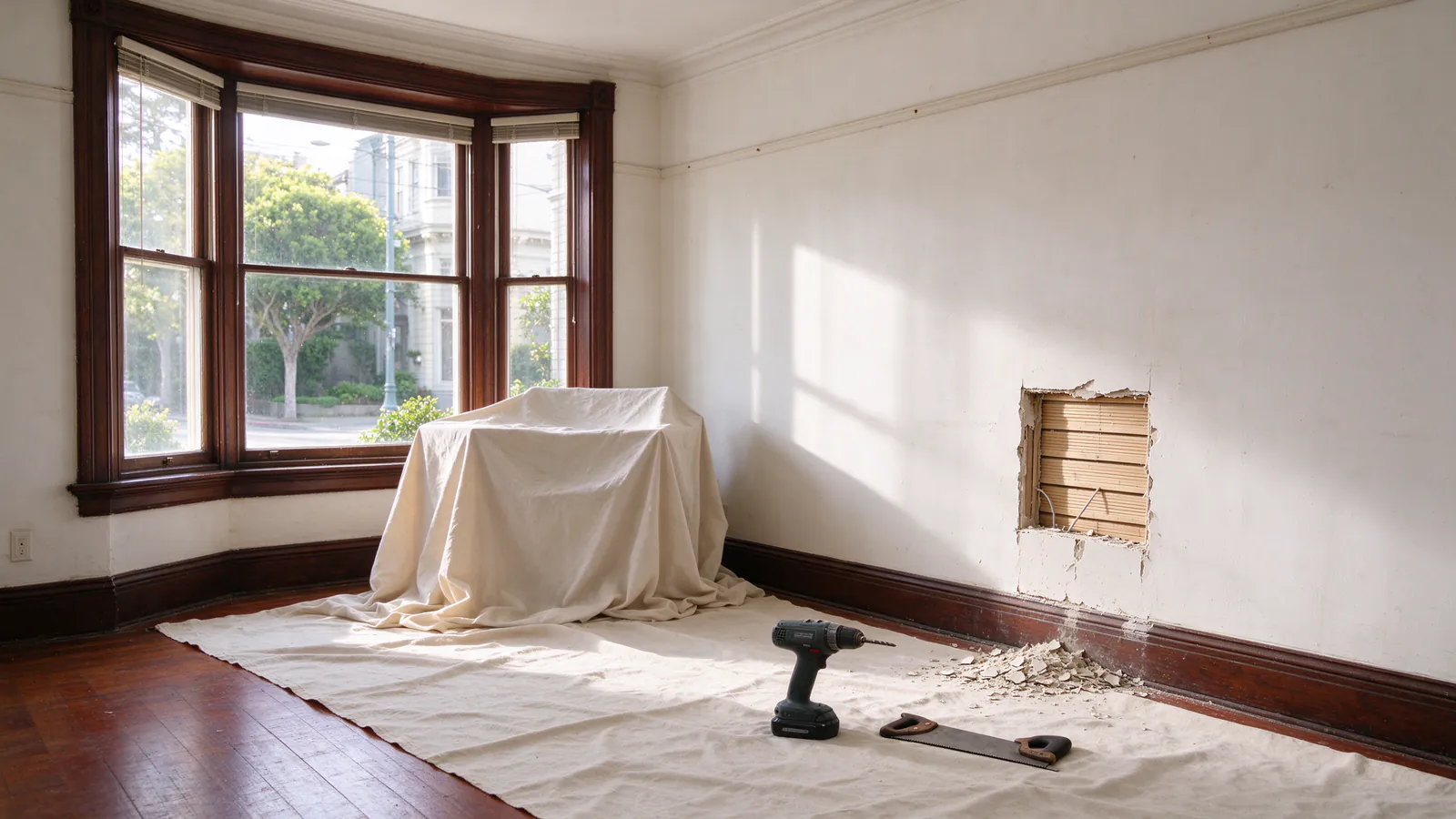
Plaster-wall rewiring
New cable fished through small, planned openings in plaster and lath, with the plaster patching included as its own line in the quote.
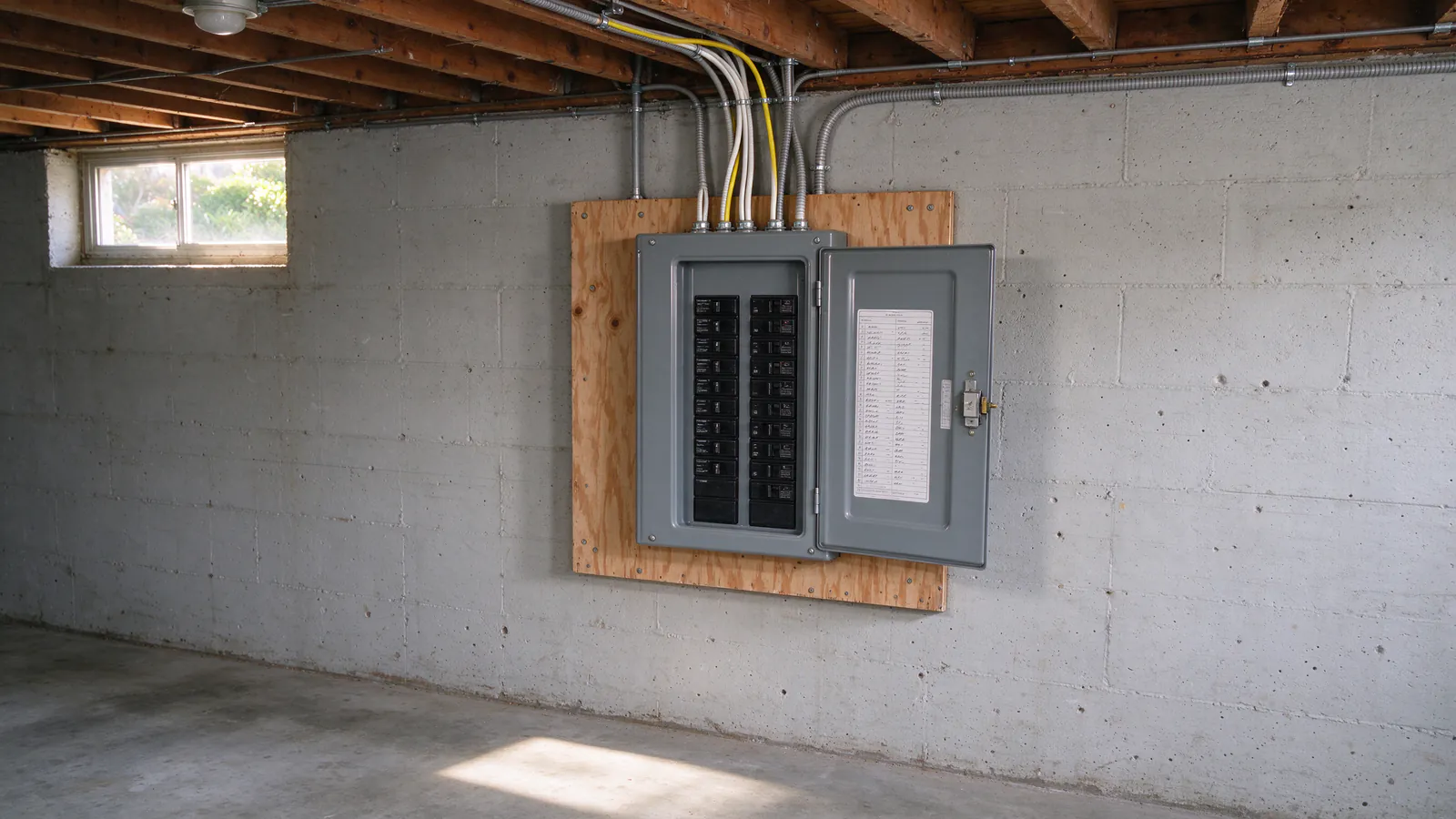
Electrical panel upgrade
100 A to 200 A service for the new circuits. A new panel on its own does not remove any knob and tube.
Partial knob and tube replacement
The circuits still in use, when earlier work replaced the rest.Knob and tube removal
Dead runs taken out where reachable, or identified and terminated.Cloth wiring replacement
Cloth-insulated cable from the decades after knob and tube.Attic insulation and knob and tube
Clearing the way for insulation under California's rules.Victorian and Edwardian rewiring
Tall walls, picture rails, plaster ceilings and original trim.Replacement during a remodel
Old wiring replaced while the walls are already open.Grounded outlets in an old house
A real ground for three-prong outlets, not an adapter.Electrical inspection for insurance
A written account of the wiring for an underwriter.Apartment building rewiring
Unit by unit, with a permit for each dwelling unit.Commercial knob and tube replacement
Storefronts and mixed-use buildings with flats above.
Four habits that keep a rewire predictable.

Ranges published before the first visit
The typical San Francisco ranges are on this page, with what pushes a job toward either end. The cost estimator gives a number without a phone call.
Access planned around plaster first
Attic, basement and garage routes are checked before any opening is marked. Walls are opened only where a run cannot be fished, in small cuts placed for patching.
A record of every circuit
Each circuit is traced, labeled and written up: what was live, what was abandoned and what replaced it. That record is what an insurer, a buyer or the next electrician will ask for.
Permitted and inspected
Work runs under a DBI electrical permit, with the pre-cover inspection before walls close and the final inspection before DBI issues the Green Tag that lets power on.
Fog City SF Knob and Tube manages each job; the electrical work is carried out by licensed and insured electrical contractors.
From the first call to the Green Tag.
First call
Tell us what started this: an insurer's letter, an inspection report, a remodel, an attic you want to insulate.
The age of the house, the number of units and any deadline shape the next step.
Walk-through
Circuits are tested to separate live knob and tube from abandoned runs, and attic, basement and garage access is checked.
Plaster, trim and finishes are noted, and you get a written scope and price.
The work
The permit is filed with DBI. New cable is fished along the planned routes and openings are kept small.
The pre-cover inspection happens before anything is closed.
Patching, inspection and the Green Tag
Once the pre-cover inspection passes, the openings are patched. Plaster patching is included and shown as its own line in the quote.
After the final inspection and the Green Tag, old runs are removed or terminated and the panel directory is updated.
Have an insurer's deadline or an inspection report? Start from what it says.
Send it with your estimate request, or call and read out the wiring note. The walk-through is planned around it.
Typical San Francisco ranges, and what moves them.
These are budgeting ranges, not quotes. Access and finishes decide where a house lands far more than the wire itself.
Whole-house knob and tube replacement
The electrical scope for a single-family home, with permits. Panel or service work is priced separately. Other contractors' quotes may or may not include patching; ours includes it as its own line.
Floor area and circuit count, attic and basement access, plaster ceilings, the number of floors, and whether walls are already open.
Panel upgrade, 100 A to 200 A
An overhead service upgrade with a new panel. Underground service with trenching can run past $10,000, and PG&E sets its own charges for the utility side.
Overhead or underground service, where the meter sits, the run from meter to panel, and the work PG&E has to schedule.
DBI electrical permit
Permit issuance and its inspections. A whole-house rewire usually falls in DBI's "more than 40 outlets and/or devices" category: $740 with up to four inspections.
The count of outlets and devices, building size, and the number of dwelling units, each with its own permit outside R-3 buildings. Extra inspections are $259 per half hour.
Start with the house and what prompted the question.
Tell us where the house is, when it was built and what started this: an insurer's letter, a sale, a remodel or an attic you want to insulate. The walk-through is planned around it, and the quote that follows lists the electrical work and the plaster patching as separate lines.
Fog City SF Knob and Tube2141 Mission St
San Francisco, CA 94110
office@fogcitysfknobandtube.com
Repair, partial replacement or a full rewire.
The walk-through decides which of these fits. What it finds live, and what an insurer or buyer is asking for, matter more than the age of the house.
Swipe the table sideways to compare all three.
| Compare | Targeted repair | Partial replacement | Full rewire |
|---|---|---|---|
| What it is | Fixing one damaged run, splice or device. The rest of the knob and tube stays. | Replacing the knob and tube circuits still in use, where earlier work already replaced others. | Every branch circuit replaced with new cable, usually with the panel. |
| Fits when | One problem on a system that is mostly abandoned, and no insurer or sale is asking about it. | Testing shows only a few circuits still live on knob and tube. | Much of the house still runs on knob and tube, walls are open for a remodel, or an insurer asks for full removal. |
| What stays behind | All remaining knob and tube, live or not. | Abandoned runs, which must be removed or identified and terminated. | Nothing live. Old runs are removed where reachable or terminated. |
| Walls and access | Usually one or two openings. | Openings along the circuits being replaced, plus hidden splices to find. | Planned openings on every floor, with attic and basement routes used first. |
| Insurance and sale | Does not change a "knob and tube present" answer. | Helps only if no active knob and tube remains; ask the insurer what it needs first. | Gives the clearest answer, though the insurer still decides. |
| Cost | Lowest up front, set by the repair. | $2,000 to $10,000 as a national budgeting range; phased work can approach a full rewire. | $20,000 to $50,000 or more, a typical San Francisco range. |
Where San Francisco files knob and tube permits.
Electrical permits that name knob and tube, by neighborhood, from DBI's records on DataSF, beside the share of homes built before 1940. East Bay cities have their own building departments, so no comparable count is shown.
Swipe the table sideways for every column.
| Neighborhood or city | K&T permits, 2016 to Oct 2026 | Homes built before 1940 | Permit office | Covered on |
|---|---|---|---|---|
| San Francisco | ||||
| West of Twin Peaks | 211 | 51.5% | SF DBI | West of Twin Peaks |
| Sunset/Parkside | 188 | 36.1% | SF DBI | Sunset and Parkside |
| Inner Sunset | 97 | 45.8% | SF DBI | Sunset and Parkside |
| Outer Richmond | 135 | 56.4% | SF DBI | Richmond District |
| Presidio Heights | 81 | 56.8% | SF DBI | Richmond District |
| Inner Richmond | 65 | 59.6% | SF DBI | Richmond District |
| Lone Mountain/USF | 55 | 56.2% | SF DBI | Richmond District |
| Mission | 135 | 56.6% | SF DBI | Mission District |
| Bernal Heights | 76 | 61.9% | SF DBI | Mission District |
| Haight Ashbury | 109 | 71.2% | SF DBI | Haight-Ashbury |
| Castro/Upper Market | 109 | 60.1% | SF DBI | Haight-Ashbury |
| Noe Valley | 93 | 54.9% | SF DBI | Haight-Ashbury |
| East Bay | ||||
| Berkeley | n/a | 46.3% | City of Berkeley | Berkeley |
| Oakland | n/a | 37.2% | City of Oakland | Oakland |
| Alameda | n/a | 31.9% | City of Alameda | Alameda |
| Piedmont | n/a | 62.9% | City of Piedmont | Piedmont |
Permits: electrical permits filed with the SF Department of Building Inspection from January 2016 to October 2026 whose description names knob and tube (DataSF, legacy electrical permits). A replacement described only as a rewire is not counted. Homes built before 1940: U.S. Census Bureau, American Community Survey 2020-2024.
Read up before the walk-through.
Plain explanations of the wiring, the rules, the permit, the cost and the work itself, written around San Francisco houses and flats.
What knob and tube wiring is
How the two-wire, open-air system works, where it falls short and what the rules say now.Knob and tube replacement cost in San Francisco
Typical ranges, DBI permit fees, PG&E work and rebates, and what moves a budget.Is knob and tube legal in California?
What the state code and San Francisco's amendments allow, and what actually forces a replacement.The BayREN knob and tube rebate
Who qualifies for the regional rebate toward remediation, and the paperwork it asks for.The San Francisco electrical permit
Who can pull it, the DBI fees, the pre-cover and final inspections, and the Green Tag.How knob and tube is replaced
Circuit mapping, the rewiring plan, cable routes, devices and inspections, in the order they happen.Will electricians work on knob and tube?
Why some small jobs get turned down, and how to check a C-10 license before you hire.How long a replacement takes
Access, live circuits, plaster, DBI inspections and any PG&E service work each set part of the schedule.Can I replace knob and tube myself?
Who qualifies for a DBI homeowner permit, and what doing the work yourself commits you to.
What San Francisco owners ask about knob and tube.
Is knob and tube wiring legal in San Francisco?
Existing knob and tube is not automatically illegal. San Francisco adopted the California Electrical Code, which still has an article covering it, and the city's own amendments leave that article alone. Wiring that was legal when installed and has been maintained can stay. It cannot be buried in insulation, and insurers apply their own rules.
Can I get homeowners insurance in San Francisco with knob and tube?
Sometimes, but it has become harder. Bay Area brokers have told reporters that listing knob and tube on an application can lead to a decline, and some insurers have stopped writing new policies on older homes that have it. Replacing it removes the question, though no contractor can promise how an insurer will decide.
Do I need a permit to replace knob and tube in San Francisco?
Yes. DBI requires an electrical permit before new wiring goes in. The work gets a pre-cover inspection before walls or ceilings are closed and a final inspection that shows it operating. Power is connected after DBI issues a Certificate to Connect Current, the Green Tag. Work concealed before inspection can be ordered opened.
Can I pull the electrical permit myself?
Only in a narrow case. DBI issues homeowner electrical permits to owners of a stand-alone single-family home that is their primary residence, and the owner must do the work personally. LLCs are not eligible, and the inspector at the Permit Center can still tell you to hire a licensed contractor. Flats and apartment buildings need a contractor.
Can I insulate my attic if it has knob and tube?
Not around concealed knob and tube without a certification. California's electrical code bars insulation that envelops it unless a California-licensed electrical contractor surveys the wiring, certifies it is in good condition and files that with the building department. Caution notices in English and Spanish go in the attic, and the insulation must be noncombustible.
Does a new electrical panel get rid of knob and tube?
No. A panel or service upgrade replaces the equipment where power enters the house, not the branch circuits running through walls and ceilings. Knob and tube circuits can be connected to a new panel and keep working. Removing knob and tube means replacing those circuits, which is why panel and rewire prices are listed separately.
Can abandoned knob and tube stay in the walls?
Yes, if it is truly dead. San Francisco's electrical code says unused conductors must be either removed or identified and terminated in an approved way. The hard part is proving which runs are abandoned, because old and new wiring can be spliced together in hidden places. Testing every circuit during the walk-through settles it.
How much of my plaster will be opened?
Some, in nearly every house. Runs that can be fished from the attic, basement or garage need few openings, while finished ceilings and tall Victorian walls need more. Openings are kept small and placed where patching is easiest, and the patching is included as its own line in the quote. DBI presumes homes built before 1979 have lead paint, so openings follow lead-safe practice.
How much does knob and tube replacement cost in San Francisco?
A typical San Francisco range for a whole-house replacement is $20,000 to $50,000 or more for the electrical scope with permits. Size, circuit count, access and plaster ceilings move it most. A panel upgrade is separate, typically $3,000 to $10,000. Other contractors' quotes may or may not include patching; ours includes it as its own line.
Is there a rebate for replacing knob and tube?
BayREN's EASE Home program reimburses up to $2,000 to fix active knob and tube. It is for income-qualified PG&E customers in homes of four or fewer units built before 2010, as part of an EASE Home weatherization project. Fog City SF Knob and Tube helps with the rebate paperwork, and the electrical contractors who do the work supply the electrician's invoice and the inactivity certification the program asks for; BayREN decides eligibility and the amount. City of Alameda households buy power from Alameda Municipal Power, so they do not qualify.
What changes in a building with several units?
Each dwelling unit needs its own electrical permit, except in single-family R-3 buildings, and occupied units have to be phased. If tenants must leave for capital improvement work, San Francisco's Rent Ordinance requires the landlord to file with the Rent Board and pay relocation expenses. Interior work in pre-1979 rentals also follows DBI's lead-safe rules.
Do I have to replace knob and tube before selling?
Selling does not by itself require replacement. Since January 1, 2026, California sellers must give buyers a statement advising an electrical inspection and warning that faulty wiring can make insurance hard to get. An inspection report and a priced scope give both sides something specific to negotiate from, instead of a line in a general report.
Find out what is still live in your walls.
Call or send a request with the age of the house, the number of units and what prompted it: an insurer, a sale, a remodel or an attic.