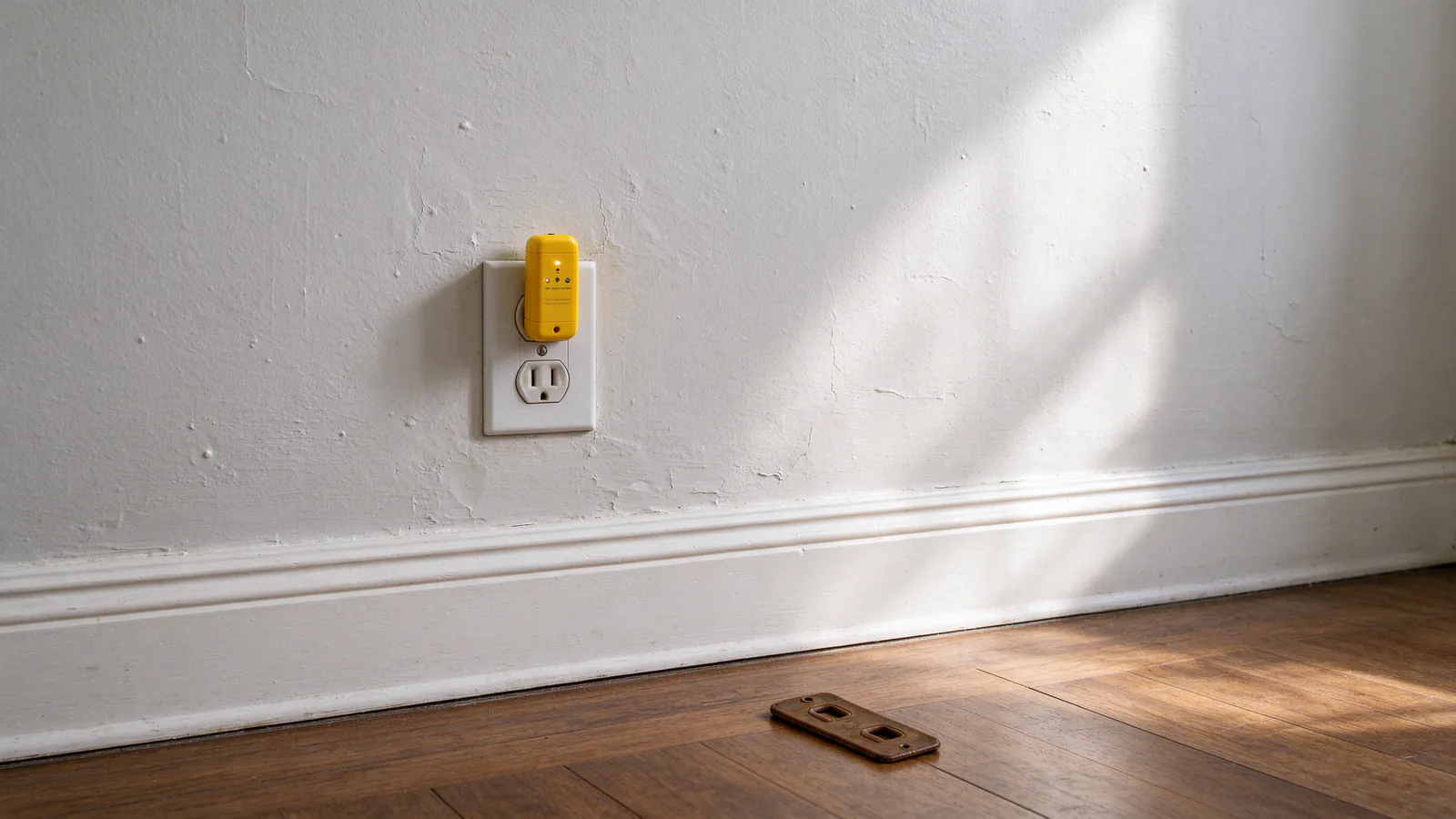
Not as a plain swap. Knob and tube has no ground wire, so a three-prong outlet connected to it has nothing behind its ground pin. The California Electrical Code gives three acceptable routes for an ungrounded outlet: a two-prong replacement, ground-fault protection with the outlet marked “No Equipment Ground”, or, in some cases, an added grounding conductor. Running new grounded circuits is the route that also retires the old wiring.
Fog City SF Knob and Tube manages knob and tube replacement and grounded outlet upgrades in San Francisco and the East Bay, with the electrical work carried out by licensed and insured California C-10 electrical contractors. This guide explains why a three-prong outlet on knob and tube is a common inspection finding, what each code-approved option does and does not fix, and how to tell which outlets in a house are actually grounded.
What the third prong does
The round third slot connects to an equipment grounding conductor: a wire, or in some installations a metal raceway, that runs back to the panel and is bonded to the grounding system there. It normally carries no current. Its job is to be there when something goes wrong.
If a hot conductor inside an appliance touches its metal case, the equipment grounding conductor gives that fault current a low-resistance path back to the panel. The current surges, the breaker or fuse opens, and the case is never left energized. Surge protectors also rely on a ground to divert spikes, and some electronics expect one.
Knob and tube was designed before grounding conductors were part of ordinary branch circuits. It has a hot and a neutral and nothing else, which makes every knob and tube circuit an ungrounded circuit. Its outlets were two-prong for that reason. The knob and tube wiring guide covers the rest of the original design.
Why a three-prong outlet proves nothing
Over a century, many two-prong outlets on knob and tube circuits were replaced with three-prong ones, usually so modern plugs would fit. Some were connected with nothing on the ground terminal. Others were given a bootleg ground: a jumper from the ground terminal to the neutral, which makes a cheap plug-in tester light up as correct.
That is worse than an honest two-prong outlet. With a bootleg ground, the appliance case is tied to the neutral, which is a current-carrying conductor. If the neutral connection fails anywhere upstream, at a loose splice for example, the case can rise to line voltage while the appliance looks switched off. Homeowners report finding knob and tube, bootleg grounds and a fake GFCI after a pre-purchase inspection had passed over them, which is why the buying guide recommends a circuit test during escrow. Of 2,023 San Francisco electrical permits naming knob and tube, filed from January 2016 to October 2026, 70 also mention grounding.
Ungrounded circuits and shock risk
An ungrounded outlet is not dangerous by itself. Two-prong appliances, from lamps to phone chargers, are built without a ground, many with double insulation. The shock concern is narrower: a metal-cased appliance with a three-prong plug, forced onto a two-prong outlet with a cheater adapter or plugged into a three-prong outlet with no ground behind it. If that appliance develops an internal fault, nothing trips, and the next person to touch the case and a grounded surface, such as a faucet, can complete the circuit.
That is why kitchens, bathrooms, laundry areas and outdoor outlets matter most, and why the code’s options below focus on protecting people even where a ground cannot be provided. The danger guide covers the other ways old circuits fail.
The options the code allows
The California Electrical Code, through CEC 406.4(D), sets out what may replace an outlet where no equipment ground exists. In plain terms:
| Option | What it does | What it does not do |
|---|---|---|
| Replace with a two-prong outlet | Honest about having no ground; meets the rule for ungrounded circuits | Does not fit three-prong plugs or add shock protection |
| GFCI protection, outlet marked “No Equipment Ground” | Trips on a fault current imbalance and protects people from shock; three-prong plugs fit | Does not create a ground, so surge protectors still lack one; leaves the old wiring in service |
| Add a separate grounding conductor, where the code allows it for the circuit | Gives the outlet a true ground path | On knob and tube, needs the same fishing and openings as a new circuit, and keeps the old conductors |
| Replace the circuit | New cable with an equipment grounding conductor, grounded outlets, arc-fault and ground-fault protection where required | Costs more than a device swap; needs a DBI permit and inspections |
GFCI protection can come from a GFCI outlet or from a GFCI breaker serving the circuit, and the AFCI and GFCI guide explains what each device detects. The marking matters: the next owner, inspector or insurer’s photographer needs to see that the outlet is protected but not grounded.
Can knob and tube be grounded?
Not on its own conductors. The code allows a grounding conductor to be added to an existing outlet in some cases, but on knob and tube it means running a new wire from each outlet back to a proper grounding point, through the same walls and ceilings a new circuit would use. At that point the owner has paid for most of the access a replacement needs and still has the old hot and neutral in service, with their aging insulation, splices and limited capacity. That is why grounding knob and tube usually turns into replacing it; the amp rating guide covers the capacity side of that decision.
Owners sometimes ask whether the ground rod outside the house means the outlets are grounded. It does not. The rod grounds the electrical service at the panel; it does nothing for an outlet whose branch circuit has no grounding conductor running back to that panel.
How grounding is checked
A grounding inspection goes outlet by outlet rather than trusting the shape of the slots. An electrician uses a meter to confirm whether each three-prong outlet has a real path to ground, checks for bootleg jumpers, confirms that any GFCI actually trips, and traces which outlets share a circuit. At the panel, the grounding and bonding of the service are checked too. The result goes into the written circuit record, outlet by outlet: grounded, GFCI-protected and marked, or ungrounded. A knob and tube inspection includes that check.
Three-prong outlets in an old house?
Find out which ones are grounded. The walk-through tests every circuit and lists each outlet's real condition.
Grounded outlets on new circuits
When a circuit is replaced, every new cable carries an equipment grounding conductor, so the outlets it feeds are grounded in fact. New receptacles must be tamper-resistant under CEC 406.12, kitchens, bathrooms and the other locations CEC 210.8 lists get ground-fault protection, and replaced circuits serving most living areas get arc-fault protection under CEC 210.12. The work is done under a DBI electrical permit with a pre-cover and final inspection, explained in the San Francisco electrical permit guide.
Where only a few rooms need grounded outlets, a targeted upgrade through grounded outlets for old houses may be enough; where most circuits are original, whole-house rewiring grounds everything at once. Cloth-jacketed and early armored cable raise the same questions, covered in the cloth wiring comparison.
To find out which of your outlets are grounded, call (628) 296-7628 or request an estimate with the rooms you need grounded outlets in.