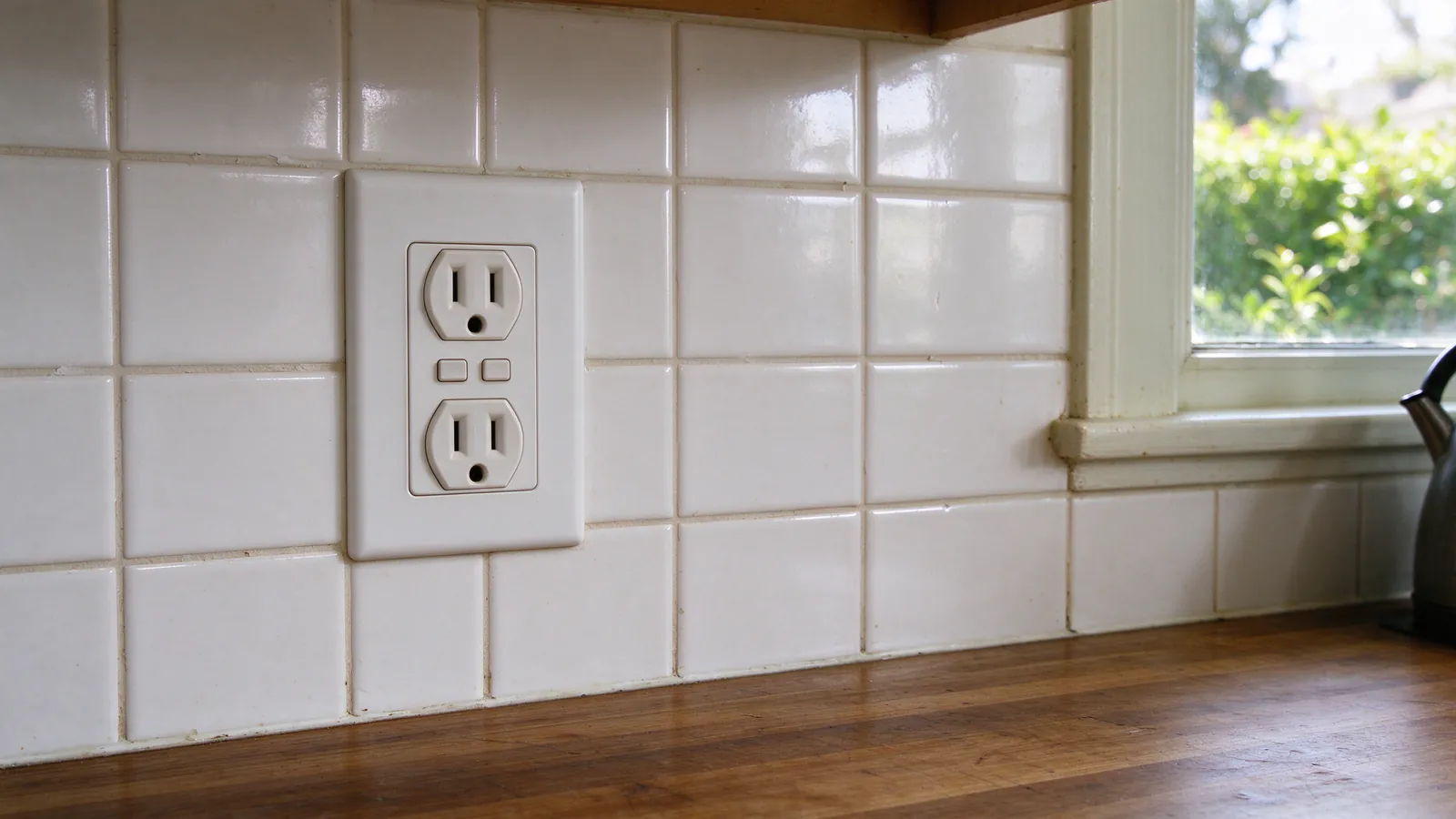
Yes, but only as a partial measure. A GFCI can go on an ungrounded knob and tube circuit and still protect people from shock, because it does not need a ground wire to work. An AFCI can watch for arcing on an old circuit. Neither one adds a ground, replaces brittle insulation or makes buried wiring legal to leave insulated.
Fog City SF Knob and Tube manages knob and tube replacement in San Francisco and the East Bay, and the electrical work is carried out by licensed and insured C-10 electrical contractors. This guide explains what these two devices do on old wiring, why they sometimes misbehave on it, and how they fit next to partial replacement or a full rewire.
What a GFCI does and why it works without a ground
A ground-fault circuit interrupter measures the current going out on the hot conductor and the current coming back on the neutral. In a healthy circuit they match. If some of the current takes another path, through a wet hand, a damaged appliance or a person touching a faulty fixture, the two no longer match, and the device opens the circuit in a fraction of a second.
That design is why a GFCI is useful on knob and tube. It does not care whether a third wire exists, because it never uses one. It is watching the two wires knob and tube already has. The California Electrical Code’s rules for replacing receptacles on ungrounded circuits (CEC 406.4(D)) list GFCI protection as one of the permitted options, with the replaced outlet labeled to show it has no equipment ground. The three-prong outlets guide covers those options in more detail.
What a GFCI does not do is give fault current a low-resistance path back to the panel. An equipment grounding conductor does that, and it is what lets a breaker open quickly when a hot wire touches a metal box or appliance case. A GFCI on knob and tube protects people from shock. It does not make a surge protector work, does not ground a metal fixture and does not turn a two-wire circuit into a three-wire one.
GFCI receptacle or GFCI breaker
A GFCI can be a receptacle or a breaker. A GFCI receptacle at the first outlet on a circuit can protect every outlet downstream of it, if it is wired to do so and the circuit’s layout is known. A GFCI breaker protects the whole circuit from the panel, but it needs a panel that accepts it; a fuse box cannot. On knob and tube, the catch is the phrase “if the circuit’s layout is known”. Original circuits wander through several rooms, and later additions can branch off in places nobody recorded. Placing a GFCI at what someone believes is the first outlet only protects what is actually downstream of it, which is why the circuit gets traced before anyone relies on the device.
What an AFCI does on old wiring
An arc-fault circuit interrupter watches the shape of the current for the erratic pattern an arc makes. Arcs happen where a conductor is loose, nicked, crushed or failing: a soldered splice that has worked loose, a cracked section of rubber insulation near a knob, a nail through a run, a connection buried in a wall. Those are exactly the failure points of an aging knob and tube system, which is why the question comes up so often.
Two forms matter in houses. A combination-type AFCI breaker in the panel protects the whole branch circuit. An outlet-branch AFCI device installed at the first outlet protects from that point on. CEC 210.12 requires arc-fault protection for branch circuits serving the listed dwelling-unit areas, and it applies when those circuits are modified, replaced or extended, with an exception for short extensions of 6 feet or less that add no outlets. In practice, every replaced knob and tube circuit serving those rooms gets arc-fault protection as part of the new work.
An AFCI on a circuit that stays on knob and tube can catch an arc that would otherwise go unnoticed. It cannot prevent the insulation from continuing to age, it cannot see heat building up in a run buried under attic insulation unless that heat produces arcing, and it cannot fix overfusing upstream if the breaker is still too large for the old conductor.
Why protective devices trip on knob and tube
Owners who add a GFCI or AFCI breaker to an old circuit sometimes find it trips immediately, or at random. That is often the device doing its job on a circuit that is not wired the way it expects.
Knob and tube runs the hot and neutral as separate wires on separate supports. Over decades of additions, it was possible to pick up a hot from one circuit and a neutral from another, or to share one neutral between two circuits. A ground-fault device reads that as current leaving on one path and returning on another, and trips. Mixed circuits cause the same problem: a run of later cable spliced onto knob and tube may have its own ground tied somewhere it should not be, and the mixed wiring guide explains how those splices get hidden in walls. Arc-fault devices can also trip on loose connections that have been arcing quietly for years.
The wrong response is to swap the device for an ordinary breaker or a bigger fuse, which recreates the overfusing problem the danger guide describes. The right one is to trace the circuit, find the shared neutral or the splice, and decide whether to repair it or replace the run. Repeated tripping is information.
What the devices fix and what they leave alone
| Concern | GFCI | AFCI | Replacement |
|---|---|---|---|
| Shock from a ground fault at an outlet | Reduced | Not its job | Grounded circuit plus GFCI where CEC 210.8 requires it |
| Arcing at a loose splice or damaged conductor | Not its job | Detected on the protected circuit | Old splices and runs removed from service |
| No equipment grounding conductor | Unchanged | Unchanged | Every new circuit carries a ground |
| Brittle or cracked rubber insulation | Unchanged | May trip if it arcs | Replaced |
| Overfusing or oversized breakers | Unchanged | Unchanged | Breakers matched to new conductors |
| Knob and tube buried in attic insulation | Unchanged; CEC 394.12 still applies | Unchanged | Rewired or certified under the California exception |
| Too few circuits for modern loads | Unchanged | Unchanged | Circuits added in the new plan |
The table is the honest answer to whether a combination AFCI mitigates all the risks of knob and tube. It mitigates one of them on the circuit it protects. The others remain until the conductors are replaced.
When device protection makes sense
GFCI or AFCI protection on remaining knob and tube can be a reasonable step in a few situations:
- A few circuits remain after earlier work. If an inspection shows only two or three original circuits are still live and they test well, adding protection while a partial replacement is planned can reduce risk in the meantime.
- Bathroom or kitchen outlets on an old circuit. GFCI protection there addresses the shock hazard right away, while the circuit itself waits for replacement.
- A planned remodel is coming. Owners who intend to open walls within a defined period sometimes add protection now and replace the wiring when the walls are already open, which the remodel service is set up for.
It is a poor substitute when the wiring is buried in insulation (the attic insulation service covers that case), when the circuits are overfused, when an inspection has found damaged insulation or improper splices, or when the reason for the work is an insurer or a sale. No carrier’s underwriting rule is public, and nobody can promise that an insurer will accept protective devices in place of replacement. The insurance guide covers what underwriters tend to ask for.
Panels, fuses and where protection lives
Breaker-type GFCI and AFCI protection needs a panel that takes those breakers. A fuse box does not, so in a house still on fuses the only route to protection is a device at the first outlet. That is one practical reason owners end up looking at a panel change. A new panel is a separate job from replacing the branch circuits, though, and the panel upgrade vs rewiring guide explains what each one does and does not change.
Local building officials draw the same line. The City of Alameda’s Building Official notes that new circuits may require AFCI compliance, and that in a kitchen arc-fault protection applies only to new or modified circuits, where modification means a change to the conductors. Adding new circuits to an old panel brings protection with them; it does not reach back to the circuits left alone. In San Francisco, DBI’s permit and inspection process applies the California Electrical Code to the new work, and whether a given change counts as modifying a circuit is settled per job.
How protection fits into a replacement
On a rewire, protection is not a choice between devices and replacement; it comes with the replacement. Each new circuit is run in grounded cable, connected to a breaker sized for its conductors, given arc-fault protection where CEC 210.12 requires it and ground-fault protection in the locations CEC 210.8 lists, and fitted with tamper-resistant receptacles under CEC 406.12. The replacement process guide walks through the order of work, and the electrical panel upgrade covers panels that cannot take the new breakers.
On a Fog City SF Knob and Tube walk-through, every circuit is tested first, so the conversation about protective devices starts from which circuits are still live on knob and tube and how each is wired. The written scope then shows, circuit by circuit, which ones are replaced and protected and which, if any, stay in service for now. If you are weighing that choice, the repair or replace guide and the knob and tube inspection are the next steps.
If a breaker or outlet keeps tripping, call (628) 296-7628 or request an estimate with the age of the house and what prompted the question.