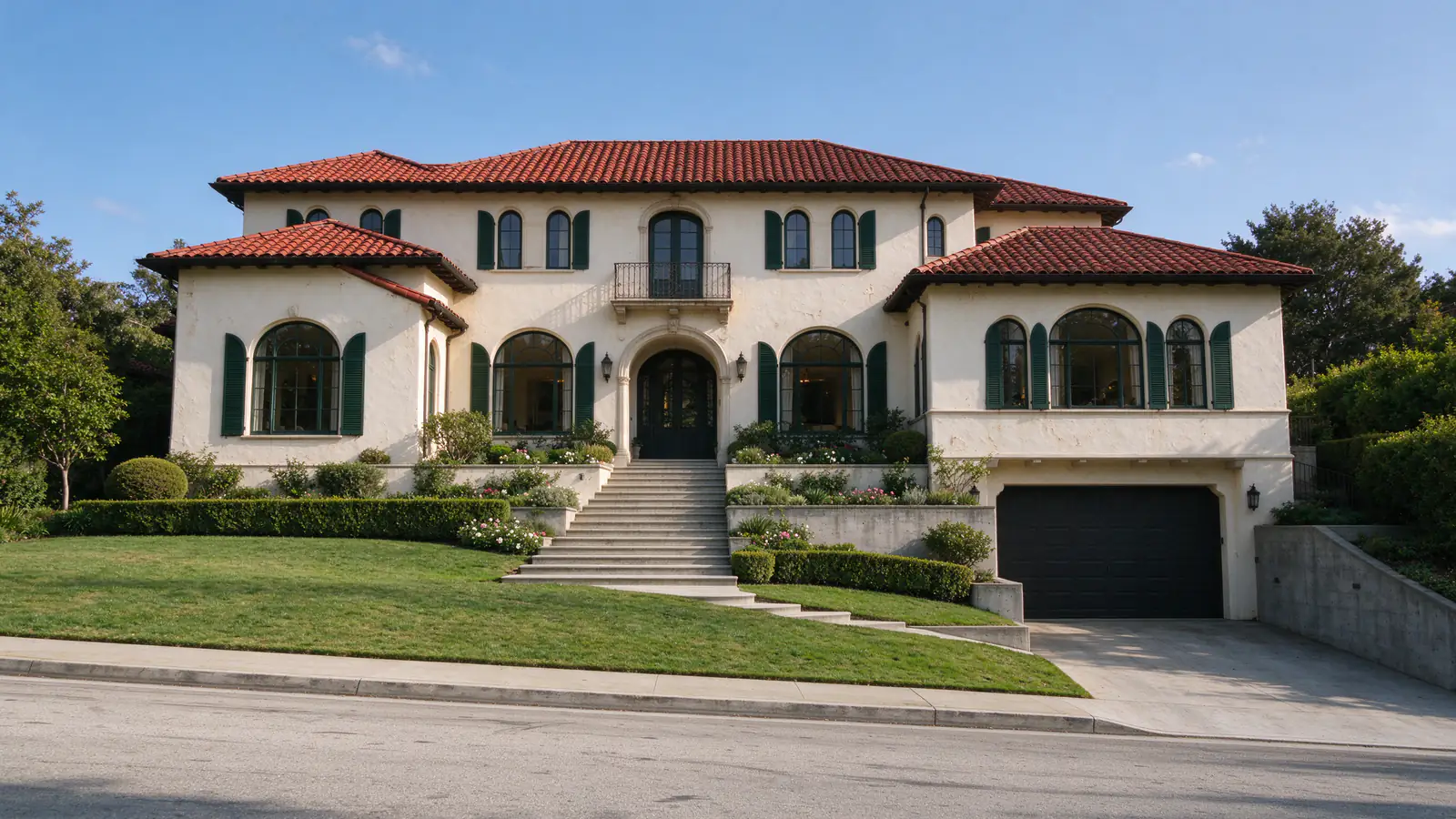
How much of a Piedmont home’s wiring gets replaced can decide what else goes into the walls. The city’s local amendments to the electrical code tie two new 240-volt circuits to a rewire of more than half a home’s wiring, and a separate reach code asks larger renovations to include an energy measure. Fog City SF Knob and Tube runs knob and tube replacement projects in Piedmont. It manages the job, and licensed and insured electrical contractors with California C-10 licenses perform the electrical work under City of Piedmont permits.
Piedmont also has the highest share of pre-1940 housing of any city covered here. Census figures show 62.9% of its 4,073 housing units were built before 1940 and 71.7% before 1950. That says how many houses date from the knob and tube era, not what any one of them still holds; testing every circuit at the walk-through is how the actual extent is found.
The more-than-half rule
Piedmont adopted the 2025 California Building Standards Code with local amendments through Ordinance 786 N.S.; the council’s draft minutes record its approval on second reading, with code changes taking effect January 1, 2026. The amendments to the electrical code add two requirements, and a third provision decides when they apply to existing homes.
Laundry areas need at least one 120/240-volt, 30-ampere circuit within six feet. Kitchens need at least one 240-volt, 50-ampere circuit within six feet of the cooking appliance location. Both then apply to any addition or modification of circuits in a laundry area or within six feet of an existing or proposed range or oven, and wherever more than 50% of the 120/240-volt wiring in a dwelling unit is replaced.
A whole-house knob and tube replacement replaces far more than half of a house’s wiring, so on the amendments as adopted it brings both circuits into the scope, whether the dryer and range are gas or electric. Because the adoption is documented in draft minutes and the final codified text was not available, these requirements are confirmed per project with the City before the scope and price are fixed. Whole-house rewiring covers the rest of that scope.
What the two circuits do to the panel
Two large 240-volt circuits take panel spaces and add calculated load. The same amendments delete the existing-dwelling load calculation method in California Electrical Code 220.83(A), the one used where no air conditioning or electric heat is added, so the load calculation for a Piedmont rewire uses the remaining method in that section. Whether the existing service can carry the result is answered at the walk-through, where the panel, the service size and the available spaces are checked.
Where the answer is no, the reach code sets the size of the fix. Piedmont states that an application for an electrical panel upgrade must include capacity to accommodate future electrification of all appliances in the residence. A panel upgrade in Piedmont is therefore sized for the whole house going electric, not only for the two new circuits. Panel and branch wiring remain separate pieces of work, a distinction the panel vs rewiring guide draws out, and the amp rating guide covers what old circuits were built to carry.
Rewiring a Piedmont house?
Start with a test of every circuit, and a scope that accounts for the city's laundry and cooking circuit rules before it is priced.
Whole house or a partial scope
The 50% threshold is something to plan around, not a target to stay under. A partial replacement that leaves original circuits live can avoid the triggers on paper, but it leaves the house with knob and tube that may still matter to an insurer, a buyer or the next attic project, and phased work can approach the cost of a full rewire. Kitchen and laundry remodels are their own trigger, because modifying circuits near the range or in the laundry area brings in the matching circuit whatever share of the house is rewired. A remodel rewire is a natural moment, since those rooms are already open.
The honest comparison is between two written scopes: a full rewire with both 240-volt circuits and any panel work, and a partial scope that lists exactly which circuits stay and why. Patching appears as its own itemized line in both.
Piedmont’s reach code and larger renovations
Separate from the electrical amendments, Piedmont’s reach code applies to renovations by cost. The city’s page says a renovation costing $30,000 or more must include an energy efficient insulation or heating system electrification improvement, and one costing $115,000 or more must include two. Kitchen or laundry renovations must include outlets for future appliances.
The staff report for Ordinance 786 N.S. proposed raising those thresholds to $35,000 and $135,000 and changing the menu of measures. The new reach code takes effect only after the California Energy Commission approves it, and its status was not found, so the threshold that applies to a given project is confirmed per project with the City.
Insulation is the measure that meets knob and tube head on. Under section 394.12 of the state electrical code, insulation may envelop concealed knob and tube only where a licensed electrical contractor has inspected the wiring, found it sound and filed a certification with the building department, with caution notices posted at the attic. No Piedmont-specific form for that survey was found. Rewiring the attic runs first, with old runs disconnected at both ends, makes the insulation straightforward; the attic insulation service covers both paths.
How a Piedmont job usually runs
The first call covers the house, what started the project and whether a remodel or a sale is involved. The walk-through tests every circuit, follows the runs through the attic, basement and any crawlspace, and checks the panel against the two possible new circuits. The written scope lists each opening and who closes it, notes which Piedmont rules the job triggers, and is priced once those are confirmed. Piedmont values its electrical permit fee on the total value of the construction work the permit covers. PG&E serves Piedmont, so any service change goes through PG&E’s application and reconnects after the city inspector approves it.
Every job closes with a written circuit record and a labeled panel directory. For budgeting context, the cost guide explains the typical San Francisco range, and each step of the work is laid out in the replacement process guide. Piedmont sits inside Oakland, so the Oakland page and the Berkeley page cover the neighboring cities.