Yes, within limits. A failed device, a loose connection at a fuse or a single damaged section can sometimes be repaired, and San Francisco’s code exempts like-for-like device replacement where no change in existing wiring is involved. Extending or adding to knob and tube is a different matter, and where insulation is brittle along a circuit, replacing that circuit is the repair that lasts.
Fog City SF Knob and Tube manages knob and tube repair decisions, partial replacement and full rewires in San Francisco and the East Bay, and the electrical work is done by licensed and insured California C-10 electrical contractors. This guide separates repair, alteration and replacement, explains when each fits, and covers how local rules and insurers treat them.
Repair, alteration or replacement
The words matter because the rules attach to them.
- Repair keeps the existing wiring and restores it: replacing a failed switch or receptacle with the same type, correcting a loose connection, or replacing a fuse with the correct size. San Francisco’s electrical code exempts like-for-like device, fuse and breaker replacement “where no change in existing wiring is involved.”
- Alteration or extension changes the wiring: adding an outlet, tapping a circuit for a new fixture, splicing new cable into an old run, or moving a switch. That needs a DBI electrical permit, and for knob and tube it is where most local resistance sits.
- Replacement retires the old circuit and runs a new grounded one from the panel along a new route. That also needs a permit, and it is the scope a partial replacement or whole-house rewiring covers.
San Francisco’s code also says existing wiring need not be altered if it was legal when installed and has been maintained, and that unused conductors must be removed or identified and terminated. So keeping sound knob and tube in service is allowed. The legality guide covers those rules in more depth.
What East Bay cities say
Local interpretation varies, which is why the rule is confirmed per address outside San Francisco.
- Alameda. The City of Alameda’s Building Official states: “K&T cannot be extended. You are allowed to repair or reenergize existing wiring.” That draws the line plainly between keeping what is there and adding to it.
- Oakland. Oakland allows certain legacy equipment, such as service equipment in a “dog-house” enclosure or a subpanel or fuse box in a clothes closet, to be “maintained and repaired but not altered,” and states that “adding a circuit or wiring is considered an alteration.”
- Berkeley. Berkeley’s Form #146, used before insulating an attic with knob and tube, has the electrician check whether the wiring is in good condition, is “not in good condition and may not be covered without repair or rewiring,” or is disconnected. Repair is on the form, but so is rewiring.
When a repair makes sense
A repair is reasonable when the problem is isolated and the rest of the circuit is sound. Typical cases:
- a single failed switch or receptacle replaced with the same type on undisturbed wiring
- a loose or corroded connection at a device, corrected without disturbing the conductors
- a fuse that was the wrong size, replaced with the size that matches the conductor
- a system that is mostly abandoned, with one live circuit in good condition that the owner plans to replace later
What these share is that testing has shown the circuit is otherwise in good order, and nobody is adding load or length to it.
When a repair stops making sense
Repair turns into replacement when the defect is not really one defect.
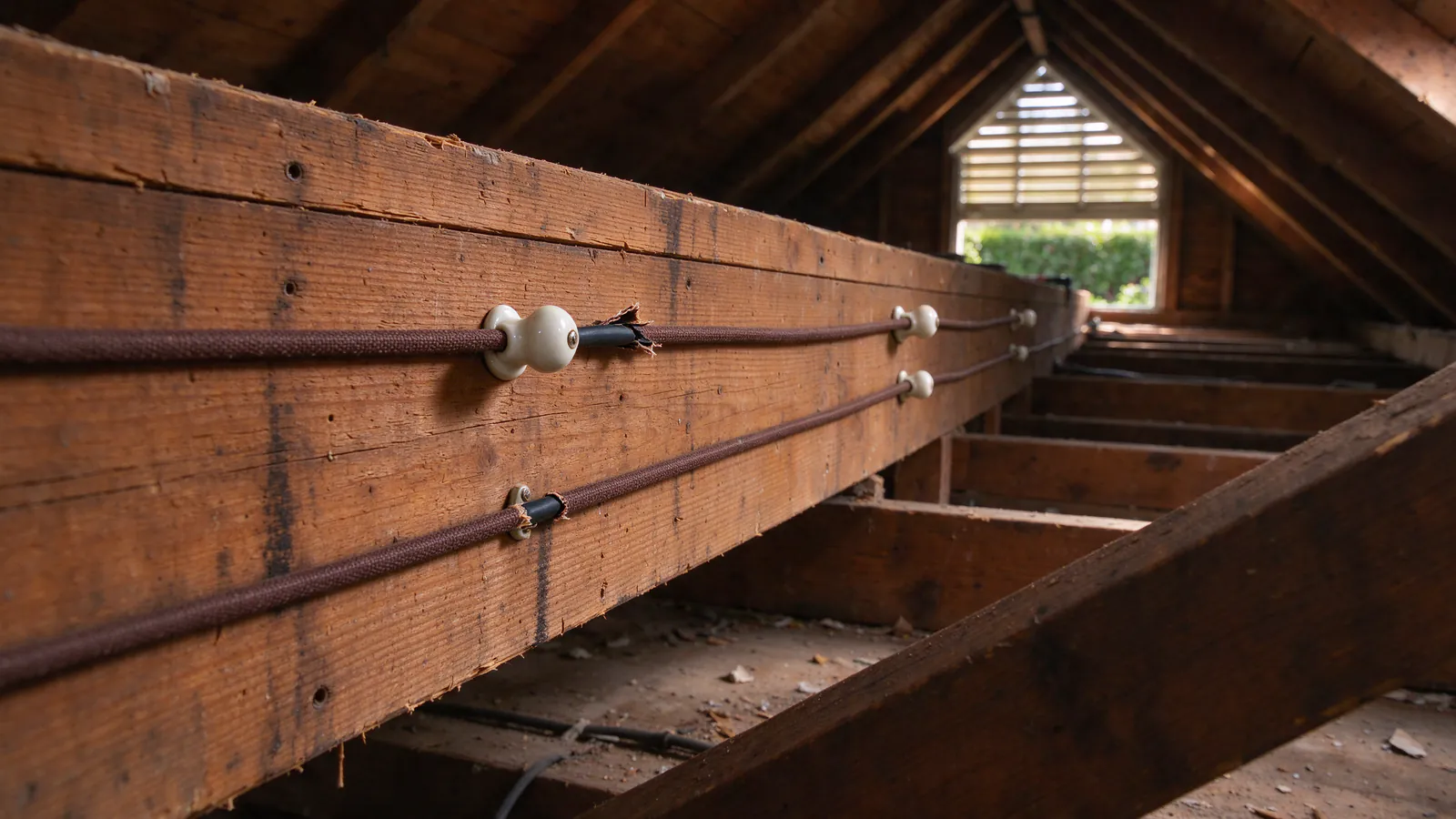
Brittle insulation along the run. If the rubber insulation cracks where it was disturbed, it is usually just as brittle a foot further along. Cutting back to sound insulation may leave nothing to work with.
Overfusing. A circuit protected by a fuse or breaker larger than its conductor may have run hot for years. Correcting the fuse is the repair; whether the conductor survived is a question for testing.
Insulation over the wiring. The California Electrical Code bars concealed knob and tube where insulation envelops the conductors, except under a licensed electrical contractor’s certification that the wiring has no deterioration, improper overcurrent protection or improper connections or splices. Wiring that fails that test cannot stay covered without repair or rewiring. The attic insulation service handles the survey.
Hidden splices and mixed wiring. A house where later cable was spliced into old runs, often with shared neutrals, rarely has one fault. The knob and tube mixed with Romex guide explains why.
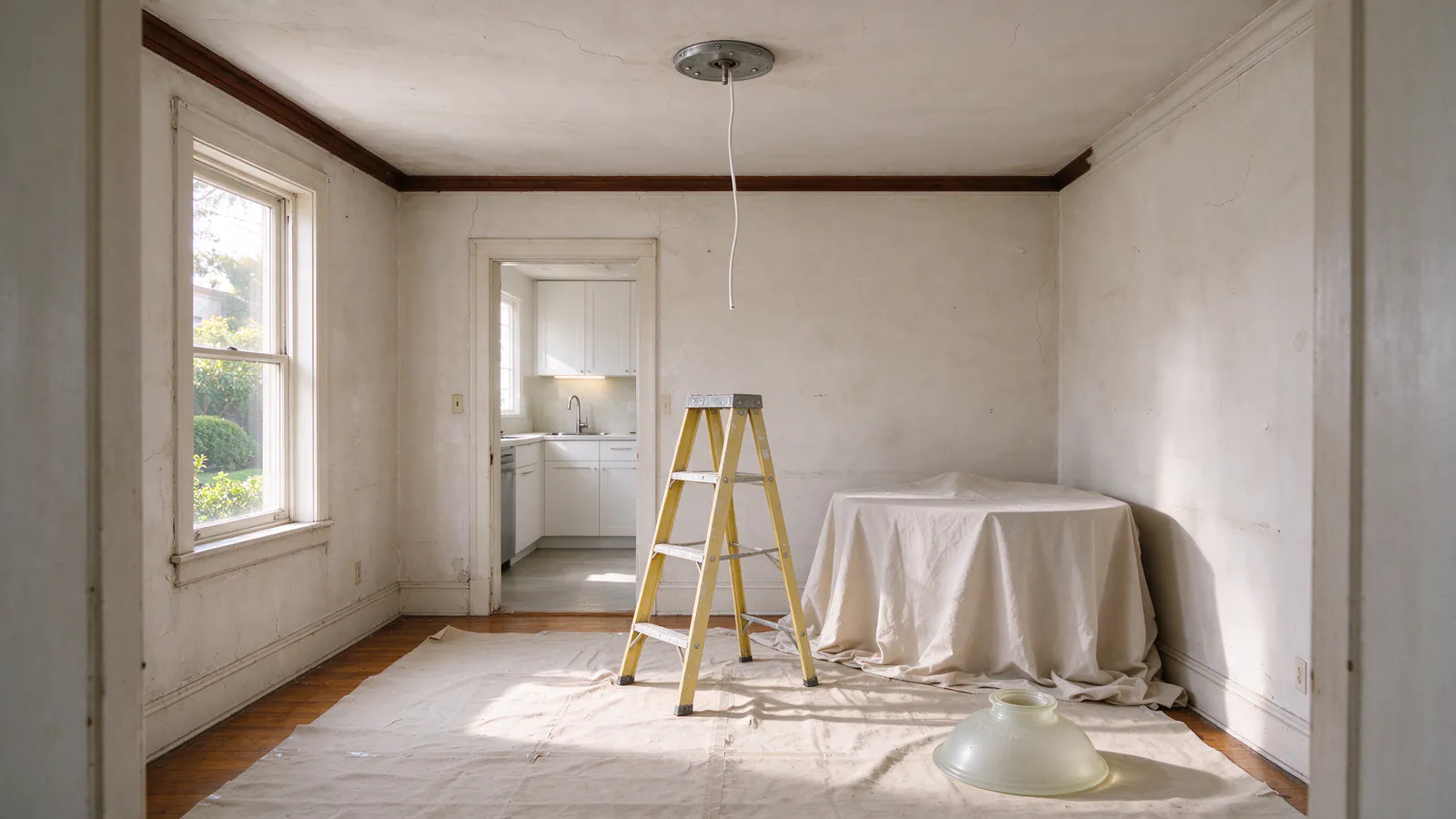
New load. If the reason for the call is a new fixture, outlet or appliance, the job is an extension, not a repair. The light fixture guide covers the case of a new ceiling light.
What is not an appropriate repair
Owners sometimes find earlier fixes and ask whether they are acceptable. Some patterns to recognize, without touching them:
- tape wrapped over cracked insulation, especially in the attic
- new cable joined to a knob and tube run with no box, or a splice buried in a wall or ceiling
- a larger fuse or breaker installed because the old one kept blowing
- a three-prong outlet fitted to a two-wire circuit with no ground or protection
- old conductors pulled tight or resting on framing, pipes or ductwork after a remodel
Any of these is a reason to have the circuit tested. None of them is something to fix yourself, and this guide gives no instructions for it; the can I replace knob and tube myself guide explains who can legally do the work.
Wondering whether your circuit can be repaired?
Testing the whole circuit, not just the failed spot, shows whether the defect is isolated before anyone prices a fix.
Why some electricians would rather replace
Homeowners report that some electricians will not take small jobs in knob and tube houses. Some will not extend it at all, because the insulation tends to crack as soon as it is moved, and a repair that disturbs one part of a circuit can damage another. Homeowners also report the opposite: experienced electricians who advise that undisturbed knob and tube in good condition probably does not need replacing. Both views are reasonable. Which applies depends on what testing finds, which is why the will electricians work on knob and tube guide treats it as a scope question.
Insurance and the repair-or-replace decision
A repair keeps knob and tube active. Many insurer questions ask only whether it is, and homeowners report a carrier that would not insure knob and tube even with a clean inspection, and owners who disconnected it in phases to switch carriers. One San Francisco permit description reads “insurance company advised owner to make it redundant and disconnect.” No carrier’s rule is public, so no one can promise how an insurer will react to a repair. If insurance is the reason for the call, an electrical inspection for insurance documents what is live, and replacement or disconnection is what changes the answer.
What a repair or replacement costs
There is no published local figure for a knob and tube repair, which depends on what is wrong and how it is reached. Replacing the circuits still live after earlier work runs $2,000 to $10,000 as a national budgeting range, and a whole house in San Francisco typically runs $20,000 to $50,000 or more for the electrical scope with permits. BayREN’s EASE Home program reimburses up to $2,000 to fix active knob and tube for income-qualified PG&E customers, as part of an EASE Home weatherization project. The cost guide explains what moves those numbers.
Deciding for your house
Start with a test, not a fix. Once every circuit is mapped, the written scope says which circuits can be kept, which defects can be repaired, and which circuits should be replaced or removed. To talk it through, call (628) 296-7628 or request an estimate with what was found and who found it.