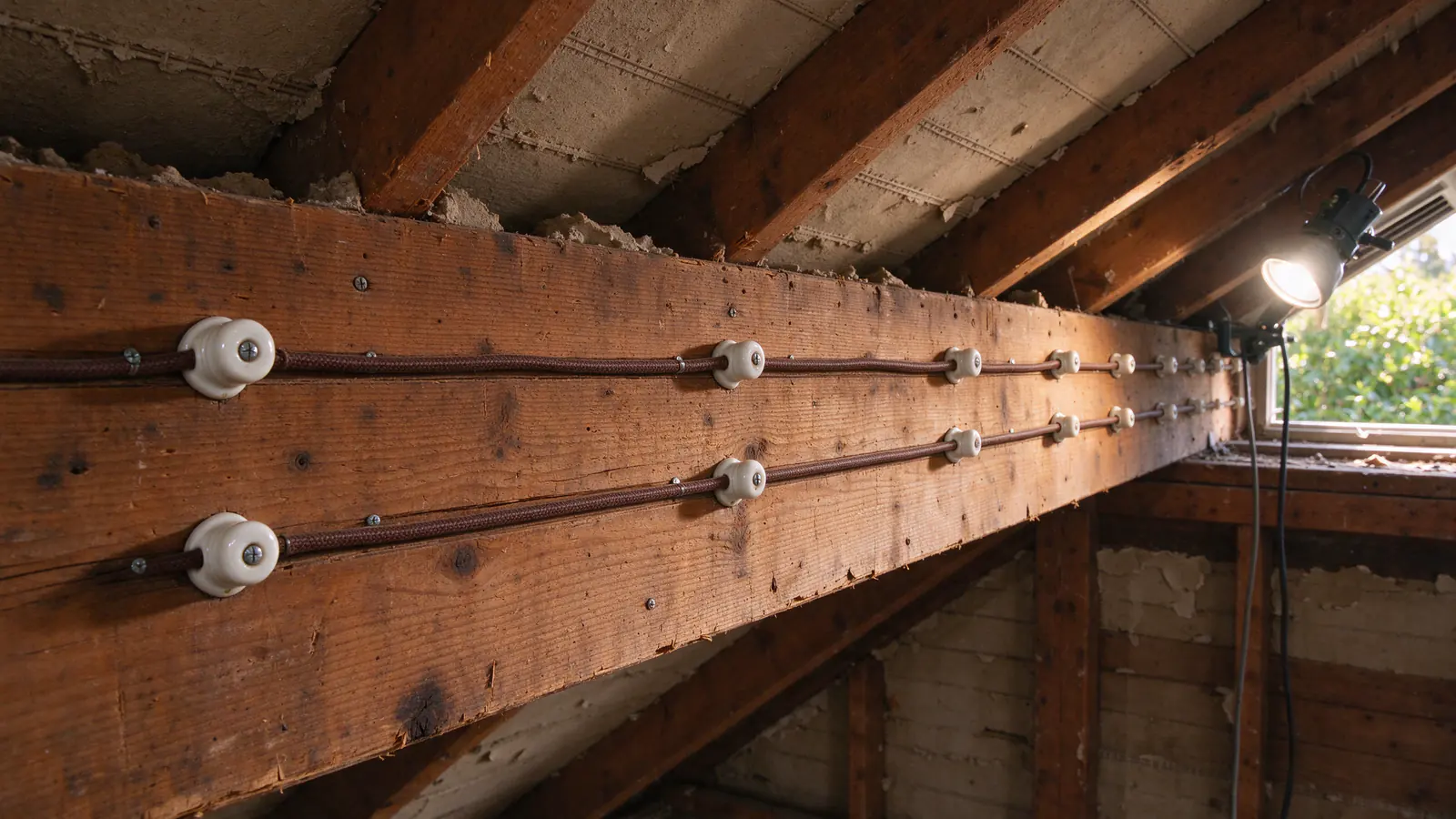
Fog City SF Knob and Tube manages knob and tube wiring removal in San Francisco and the East Bay: old runs that no longer serve the house are verified dead, disconnected at both ends, taken out where they can be reached, and recorded. Licensed and insured electrical contractors (California C-10) carry out the electrical work.
Removal and replacement are different jobs. Replacement, whether partial or a whole-house rewire, installs new circuits to take over from live knob and tube. Removal deals with the old wiring itself: the runs a past rewire left behind, the stubs a remodel cut off, the lengths in the attic that nobody is sure about. Some houses need both, in that order, but a house that was rewired years ago may need only removal and a record.
Does knob and tube have to be removed?
Not by itself. San Francisco’s Electrical Code says existing wiring that was legal when installed and has been maintained need not be altered, and it requires unused conductors and cables to be either removed or suitably identified and terminated in an approved manner. So dead knob and tube can legally stay in a wall if it is disconnected and dealt with properly; the California legality guide covers the wider rules. What brings removal up is usually something else: an attic about to be insulated, an insurer asking about the wiring, which an electrical inspection for insurance answers in writing, or a buyer who wants to know that the porcelain knobs in the attic carry nothing.
The answer changes if a run is live. California Electrical Code 394.12 bars concealed knob and tube where insulation envelops the conductors, unless a licensed electrical contractor surveys and certifies it under the code’s California exception. A dead run that has been disconnected and removed takes that question off the table.
What happens on the first visit
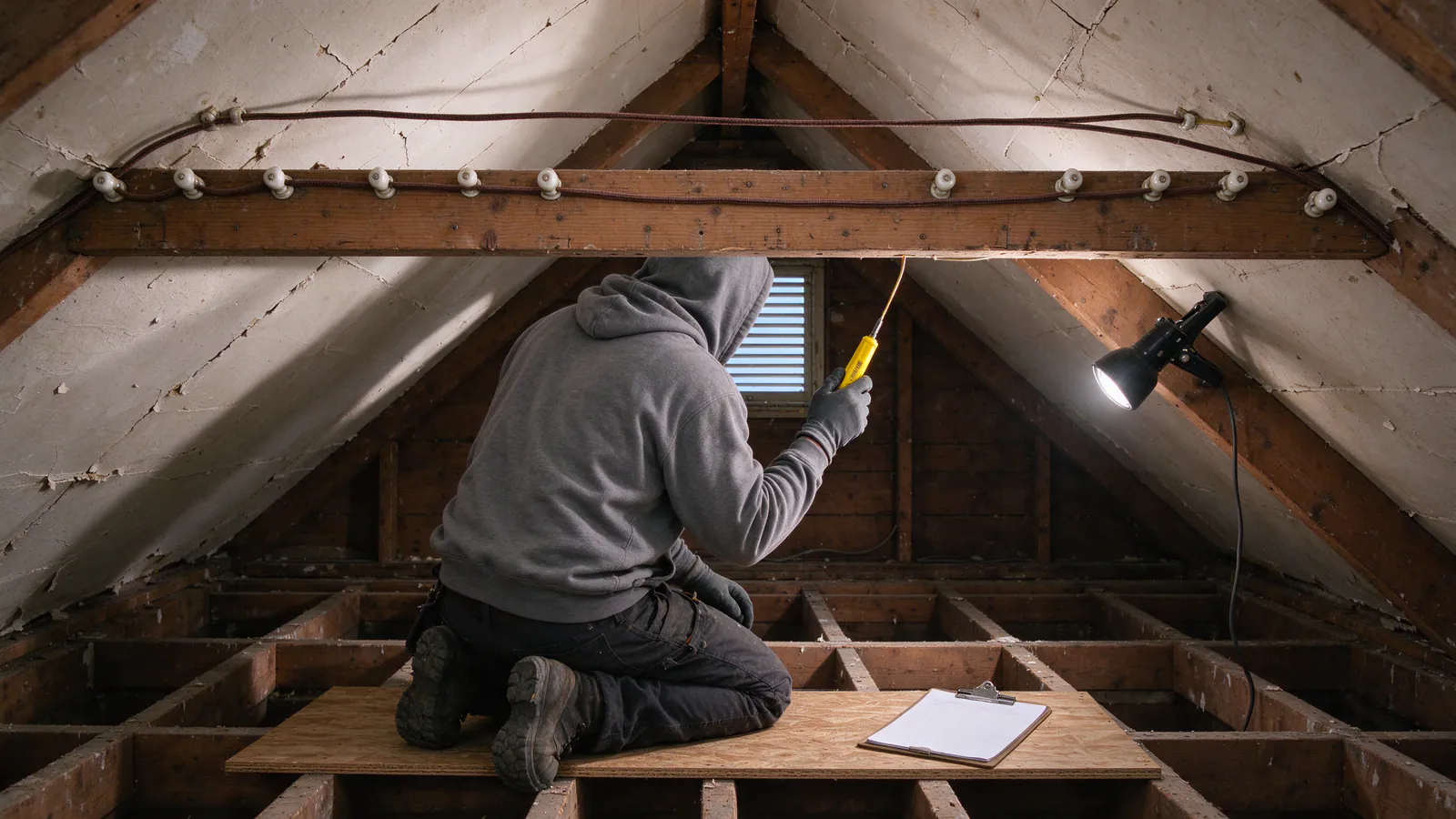
Every circuit is tested before any run is called dead, the same testing a knob and tube inspection starts with. Each circuit is identified at the panel or fuse box and traced, and each knob and tube run seen in the attic, basement or garage is checked for voltage. The point is to sort runs into three groups: live, dead, and dead-looking but fed from somewhere else. That third group is the one that causes trouble.
The visit also looks at access. Attic height, a hatch versus a walk-up stair, existing insulation, stored belongings and the route down to the basement all affect how much can be pulled out and how long it takes. The written scope then lists which runs will be removed, which terminated in place and what, if anything, needs replacing first.
Abandoned is not the same as disconnected
“Abandoned” knob and tube is wiring that no longer serves its original purpose, but the word hides several conditions. Some runs were properly disconnected at both ends during a rewire. Some were cut at the fuse box but left connected at the far end to outlets or splices. Some were abandoned by a remodel that stopped using a room’s old outlets yet left the run joined to a ceiling splice that still carries a later circuit. And some were never abandoned at all; they only look old.
Those differences matter because a run that is still connected at one end can be re-energized by a change elsewhere, and a run fed from a later circuit is live no matter what the fuse box says. The active vs abandoned guide explains how each condition arises. A San Francisco permit description from an insurer-driven job puts the goal plainly: the “insurance company advised owner to make it redundant and disconnect.”
Isolating and verifying old circuits
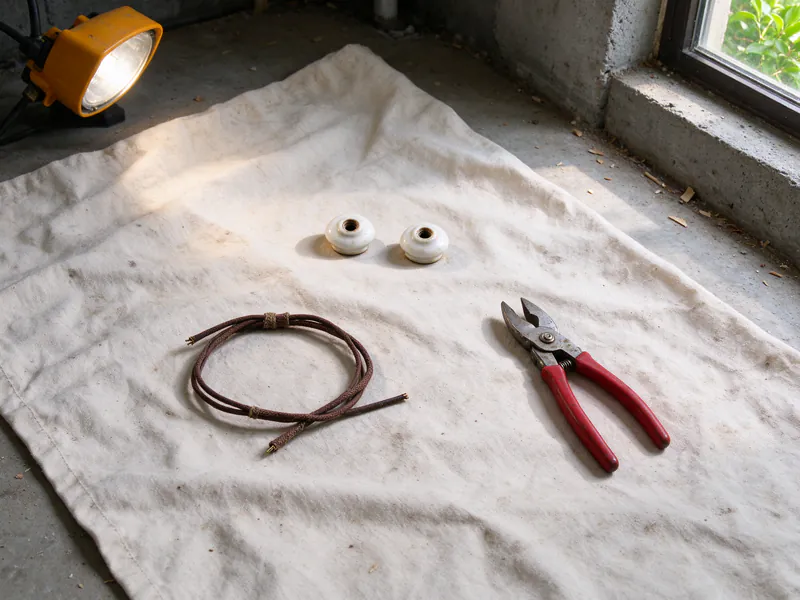
Disconnection happens at both ends of each run. At the source end, the run is cut free of the panel, fuse block or the splice that fed it. At the load end, it is cut free of the outlets, lights and splices it served. Disconnecting only at the fuse box, as some earlier jobs did, leaves a length of wire still joined to devices and other conductors, waiting for someone to reconnect it by mistake.
After disconnection the run is checked again for voltage at every point that can be reached, and only then treated as dead. Each disconnected run is recorded with where it starts, where it ends and what was done with it. That record is what turns “we think it is dead” into a fact an insurer, buyer or BayREN can rely on, and it is the same discipline used on the retired runs of every partial replacement.
Removing it or leaving it in the wall
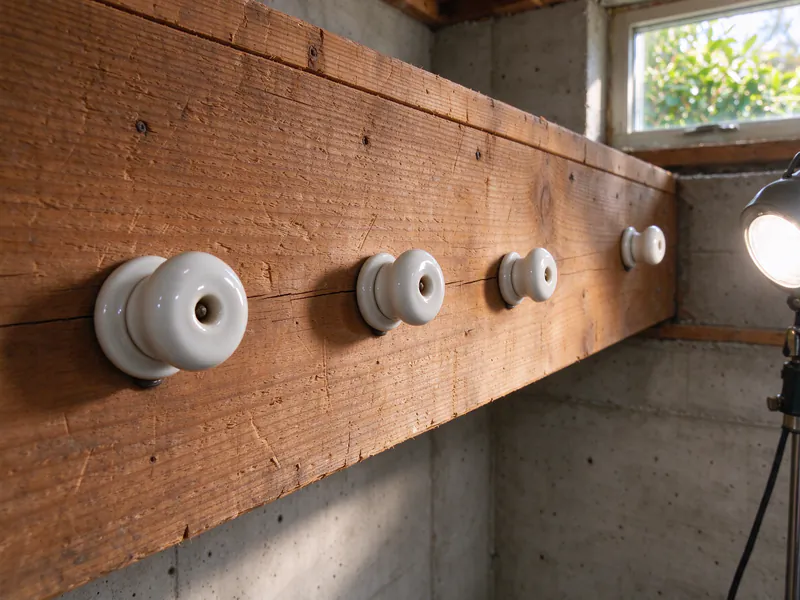
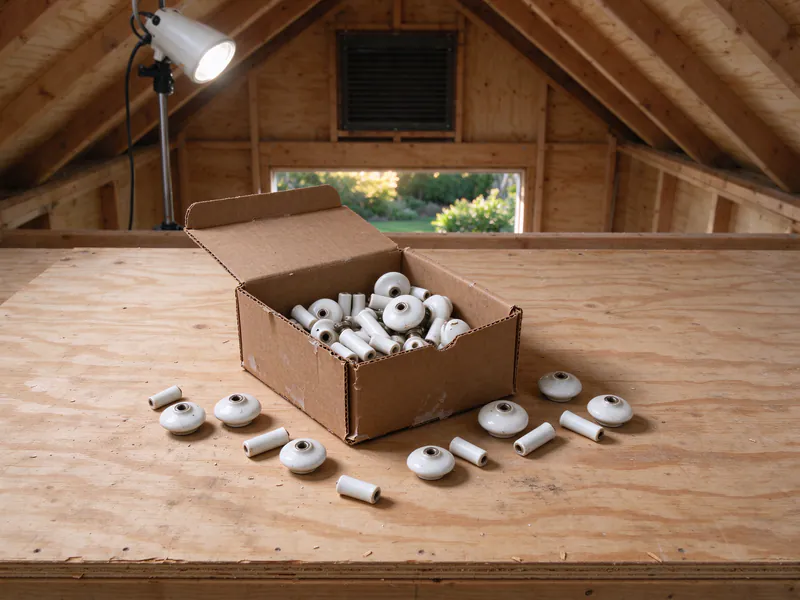
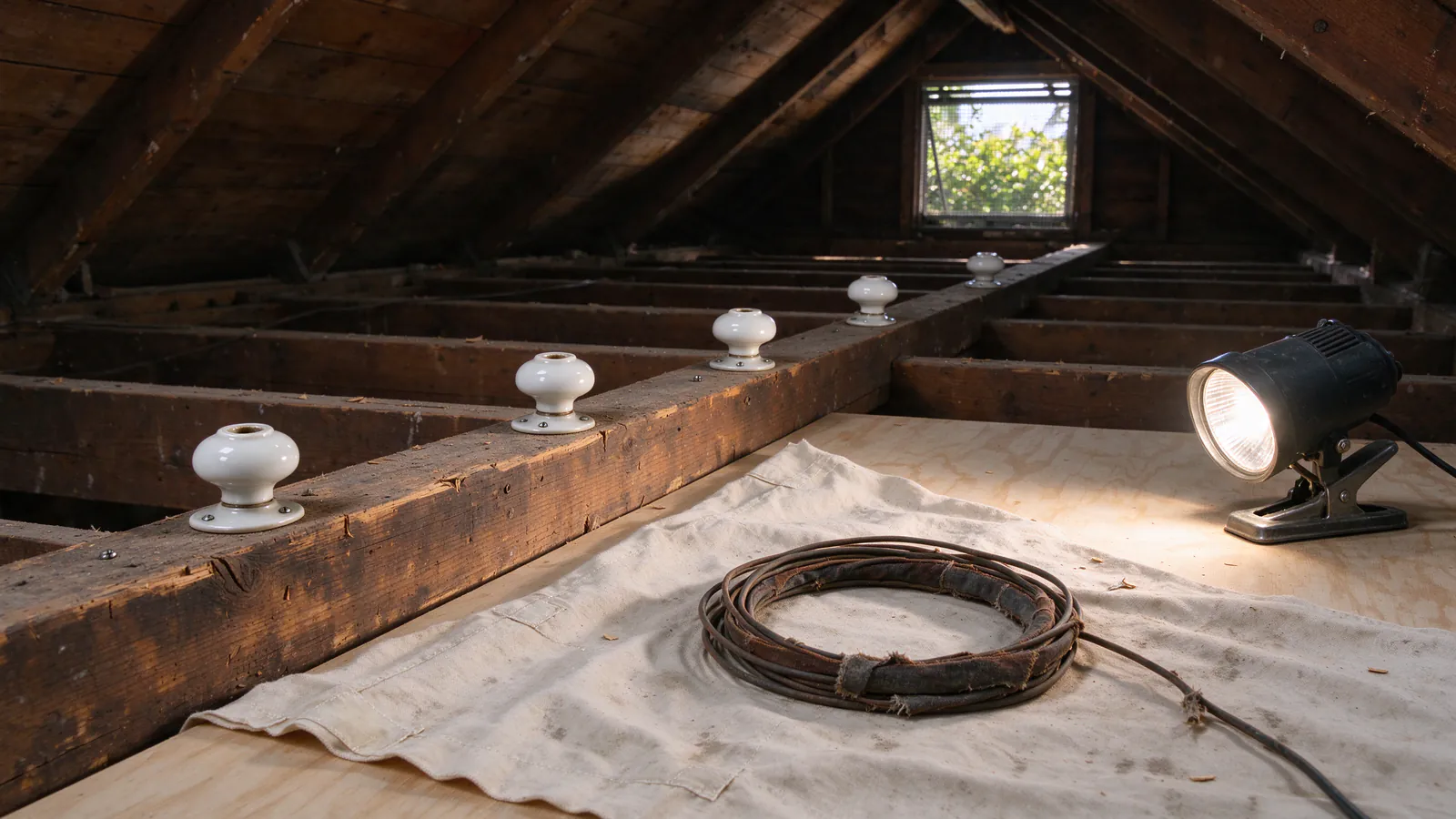
Once a run is verified dead, the choice is between taking it out and terminating it in place, and access decides. Runs in attics, basements, crawlspaces and garage ceilings are usually removed: the wire is pulled, and the knobs and tubes come out with it where they are loose or in the way. Of the 2,023 DBI electrical permits filed from January 2016 to October 2026 whose descriptions name knob and tube, 187 mention a basement, crawlspace or garage and 22 an attic, the spaces where most removal happens.
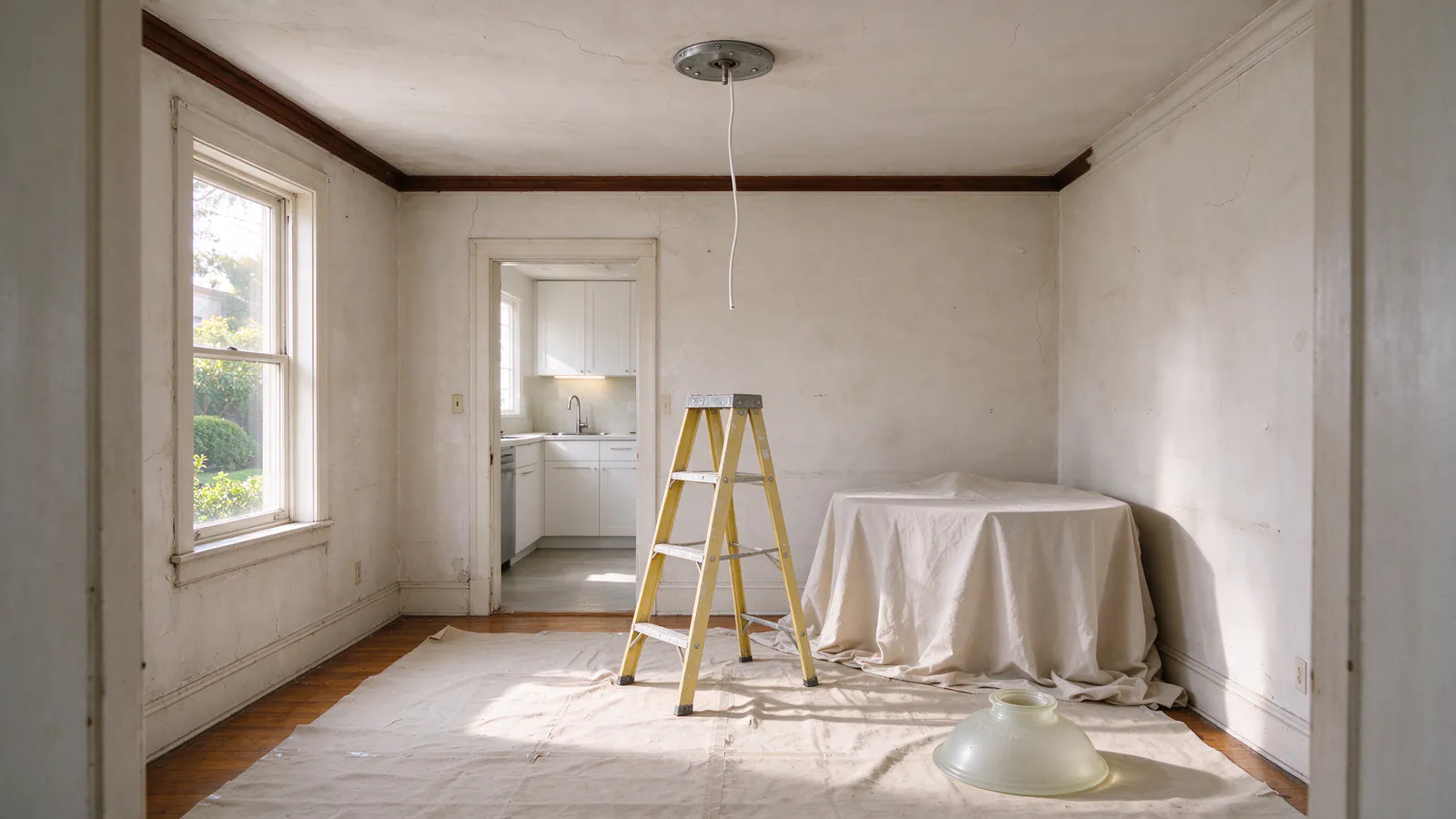
Runs inside closed plaster walls are a different case. Pulling them out would mean opening finished walls for wire that no longer does anything, so they are disconnected at both ends, identified and terminated in place, which is what the code allows for unused conductors. Physical removal is worth it where the wire would confuse the next person into the space or stand in the way of insulation; abandonment in place is worth it where removal would cost more in plaster than it gains in clarity. Where openings are needed for other work, plaster-wall rewiring covers how they are kept small.
Clearing the attic before insulation?
The old runs are tested, disconnected at both ends and pulled out where they can be reached, with a record of what came out.
Attic removal before insulation
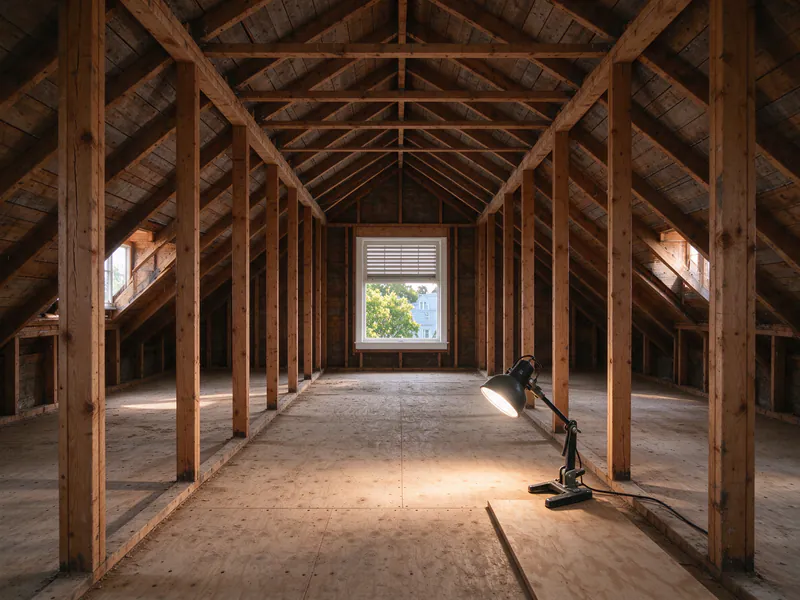
Insulation is the strongest reason to pull knob and tube out of an attic. If the attic runs are live, they cannot be buried in insulation without the electrician’s survey and certification the code describes, or replacement first; the attic insulation service covers that route. If the runs are dead, removing them clears the attic and leaves nothing for an insulation installer or a future inspector to question.
Berkeley handles this with its own document. The city’s Form #146, the Knob-and-Tube Wiring Safety Report, has the electrician check one of three conditions, one of which is that the wiring is disconnected, not live or removed, and the form is posted in the attic before inspection, as the Berkeley page describes. No equivalent DBI form was found for San Francisco, where what the insulation job needs is confirmed per address.
The BayREN inactivity certification
BayREN’s EASE Home program offers up to $2,000 toward fixing active knob and tube, and its announcement of the offer also listed $300 toward a licensed electrician’s certification that knob and tube is inactive (the program page does not show that line, so confirm it with BayREN), for income-qualified PG&E customers in homes of four or fewer units built before 2010 whose EASE Home project includes a weatherization measure such as insulation or duct work. The program asks for the electrician’s invoice and the certification of inactivity. The contractors supply both, and Fog City SF Knob and Tube helps with the rebate paperwork; BayREN decides eligibility and the amount.
The limits matter in the East Bay. In San Francisco the income ceiling for a household of four is $232,050; in Alameda and Contra Costa counties it is $187,575. City of Alameda households buy power from Alameda Municipal Power rather than PG&E, so they fall outside EASE Home altogether. The BayREN rebate guide has the full conditions.
What sets the cost
No published price exists for knob and tube removal, so a quote rests on the house. The drivers are access to the attic, basement and crawlspace; the number of runs; whether insulation already covers them; whether dead runs stay in the walls or come out; and whether any run tested live and has to be replaced before it can be removed. Insurer or BayREN documentation adds a written step. The cost guide explains how removal fits alongside replacement in a full budget, and the cost estimator gives a first number for the replacement side.