Some do and some do not. An electrician’s license covers the wiring, and homeowners report quotes that leave openings unfilled, quotes that close them roughly, and quotes that include finished plaster repair as a separate line. Fog City SF Knob and Tube includes plaster patching as its own itemized line in the quote, so the question becomes what finish level each opening gets and who closes it.
Fog City SF Knob and Tube manages rewiring projects in San Francisco and the East Bay, with the electrical work carried out by licensed and insured California C-10 electrical contractors. This guide explains why patching is so often left out, what the word can mean in a bid, and what San Francisco’s inspection and lead-safe rules add, so you can compare quotes that cover the same work. The plaster-wall rewiring service covers how openings are kept small in the first place.
Why patching is so often left out
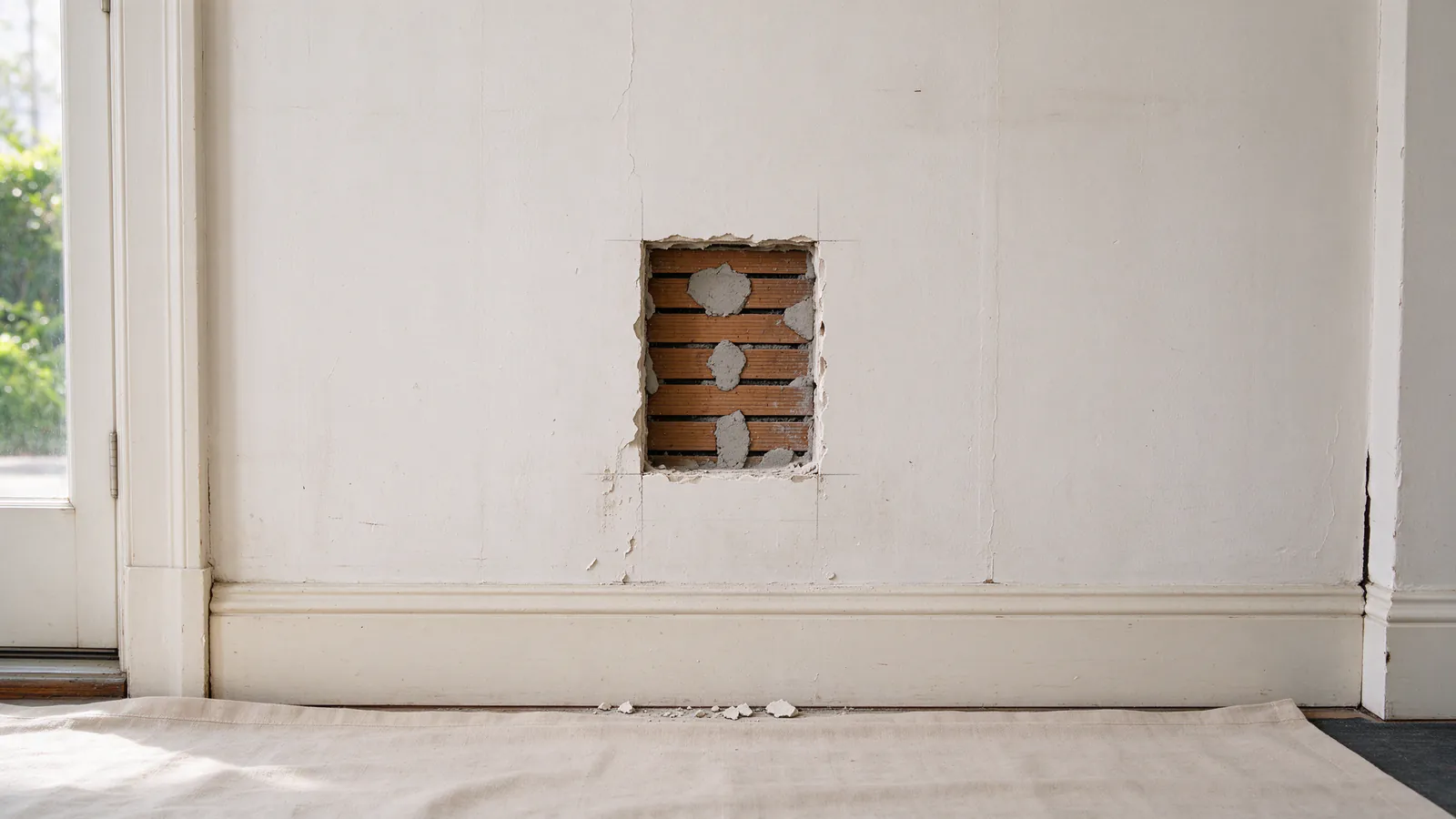
Rewiring a closed-wall house, whether a whole-house rewire or a partial replacement, means openings. New cable is fished from the attic, basement or garage wherever possible, but outlet boxes, switch locations, ceiling fixtures and blocked cavities usually need small cuts in plaster or drywall. Closing them well is plaster work, not electrical work, and some electricians do not do it.
Homeowners report the gap directly. An Oakland Victorian owner described two quotes for the same knob and tube remediation: one electrician did not do lath and plaster and would leave the holes, while the other offered plaster repair as a separate line. A Berkeley owner who struggled to find an electrician for a near whole-house job was told it was “going to take more than an electrician.” The friction is rarely refusal of the wiring. It is that the finish work falls between trades.
That gap is also why quotes for similar houses can look far apart. The cost guide notes that a typical San Francisco range for the electrical scope of a whole-house job is $20,000 to $50,000 or more with permits, and that patching may or may not be in a given quote.
What “patch” can mean in a quote
The same word covers very different work. Before comparing totals, find out which of these each quote includes.
| Level | What it means | What is left for the owner |
|---|---|---|
| None | Openings are left open after the inspection | All closing, finishing and paint |
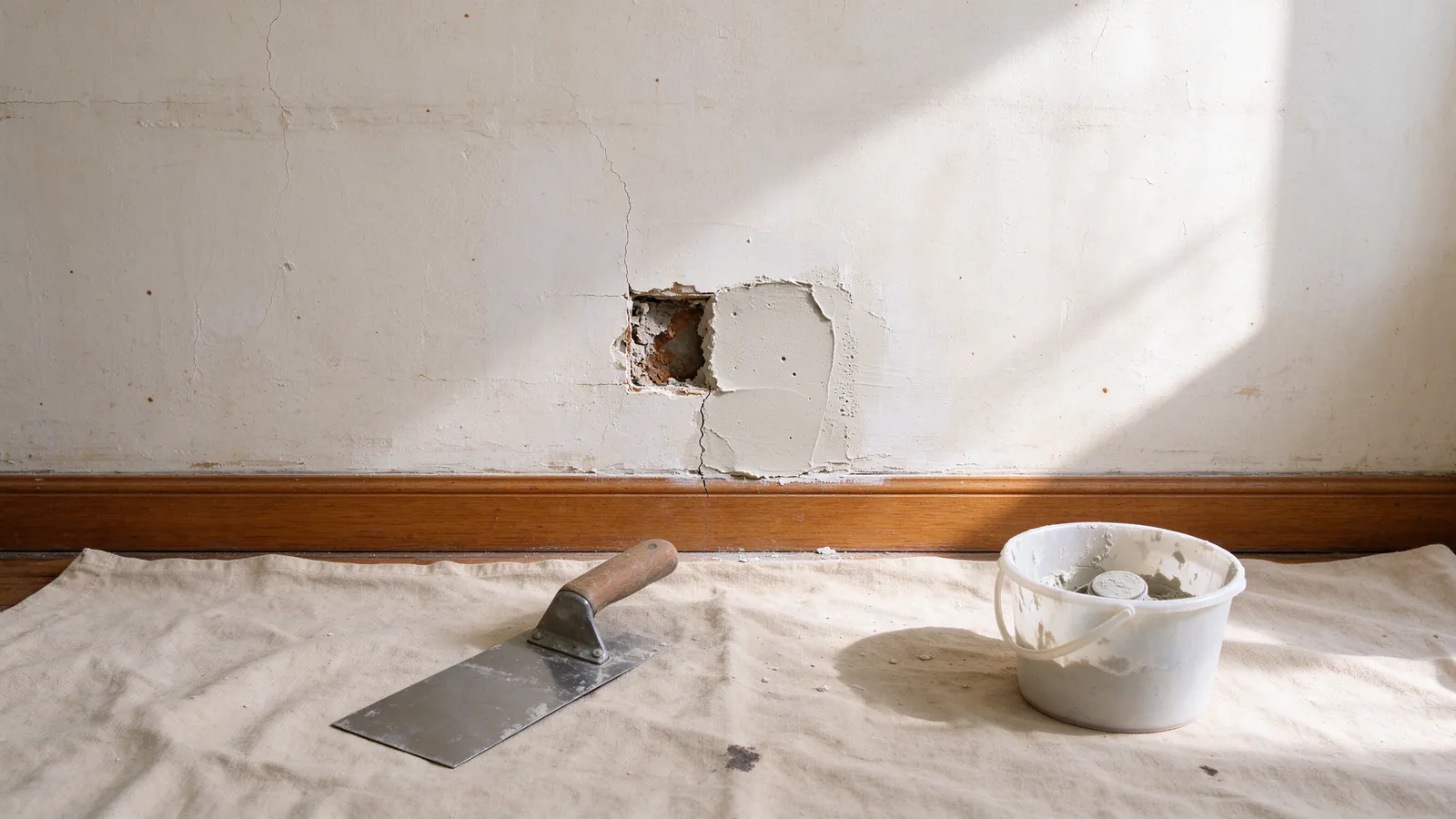
| Rough close | Openings are filled or covered so the wall is closed | Skim, sanding, texture and paint |
| Finish patch | Openings are filled and brought flush and smooth with the surrounding wall | Texture match where needed, primer and paint |
| Texture match | The patch is finished to match the wall’s texture or ceiling finish | Primer and paint |
| Paint | The patched area or whole wall is painted | Nothing, if the scope is whole walls |
Paint is its own decision. A small patch painted alone on an old wall may not match the paint around it, which is why repainting a whole wall or room is an option some owners prefer to schedule themselves. Whatever is agreed, the written scope should list every opening, the finish level and who closes it. The rewiring quote checklist covers the other lines worth comparing.
Plaster and lath vs drywall
Whether a wall is plaster on wood lath or drywall changes both the openings and the repair. Plaster is harder and more brittle than drywall, with wood lath behind it, and it cracks if cut carelessly. Openings are kept small and placed where they are easiest to restore: at boxes, at the tops and bottoms of cavities and behind trim that can be removed and replaced. Picture rails, crown moldings and decorative ceilings in Victorian and Edwardian rooms add care. Victorian and Edwardian rewiring covers those houses.
There is no San Francisco measure of how many walls are still plaster, and many older houses have been partly converted to drywall over the years. Late-1930s Sunset tract houses were built in an era when merchant builders organized specialized sheetrock crews, so a west-side house may be drywall where a Mission flat is plaster. The walk-through, which also tests every circuit the way a knob and tube inspection does, notes which each wall is.
Why patching comes last
San Francisco’s electrical code requires a pre-cover inspection before new wiring is covered or concealed, and DBI can order concealed, uninspected work exposed at the owner’s expense. So openings stay open until the inspector signs off. Patching is the stage after that, and closing a wall early risks opening it twice. The timeline guide shows where patching falls in the schedule.
Lead-safe rules around openings
DBI presumes that buildings built before 1979 contain lead paint unless a certified inspector shows otherwise. Its lead-based paint safety guide calls for notifying neighbors at least three business days before work, posting a 32 by 24 inch “Lead Work in Progress” sign, restricting access, containing dust with plastic sheeting and avoiding uncontained dry sanding or scraping. Non-compliance can bring a Notice of Violation, fines or a stop to work. Which interior rules apply to an owner-occupied home and which to a rental is confirmed per project.
The federal layer applies too. Under the EPA’s Renovation, Repair and Painting rule, firms paid to disturb paint in homes built before 1978 must be certified and follow lead-safe practices, and electrical work is expressly covered. The rule has a minor-repair exemption for 6 square feet or less of painted surface per room inside. A rewire’s openings are small, but they add up across a room. The lead and asbestos guide explains what that means in practice.
Want every opening listed before work starts?
The written scope shows each opening, its finish level and who closes it, with patching as its own line.
What sets the cost of patching
There is no current published San Francisco figure for post-rewire patching, so this guide does not give one. What moves it:
- the number and size of openings, which depends on access from attics, basements and garages
- plaster and lath vs drywall, and ceilings vs walls
- the finish level: rough close, flush finish, texture match or paint
- trim, picture rails and decorative plaster that have to be removed and restored
- lead-safe containment and cleanup in pre-1979 buildings
- occupied rooms, which need covering and daily cleanup
Local labor runs well above national levels. The U.S. Bureau of Labor Statistics puts the mean hourly wage for plasterers and stucco masons in the San Francisco metro at $37.07, about 24% above the $29.83 national mean, and for drywall and ceiling tile installers at $43.79, against $30.58 nationally. A wage is not a billing rate, which also carries insurance, licensing, vehicles and overhead, but it explains part of why restoration costs more here.
How to compare quotes on patching
Ask each bidder the same questions, in writing:
- Does the price include closing every opening, and to what finish level?
- Who closes them: the electrical contractor, a plasterer, or you?
- Is texture matching or paint included, and on which walls?
- How are trim and decorative plaster handled?
- What lead-safe steps are included for openings in painted plaster?
Two quotes that answer those the same way are comparable. Two that do not may be pricing different jobs. To see what your house would need, call (628) 296-7628 or request an estimate with the age of the house and whether walls are plaster or drywall, or try the cost estimator for a first number.