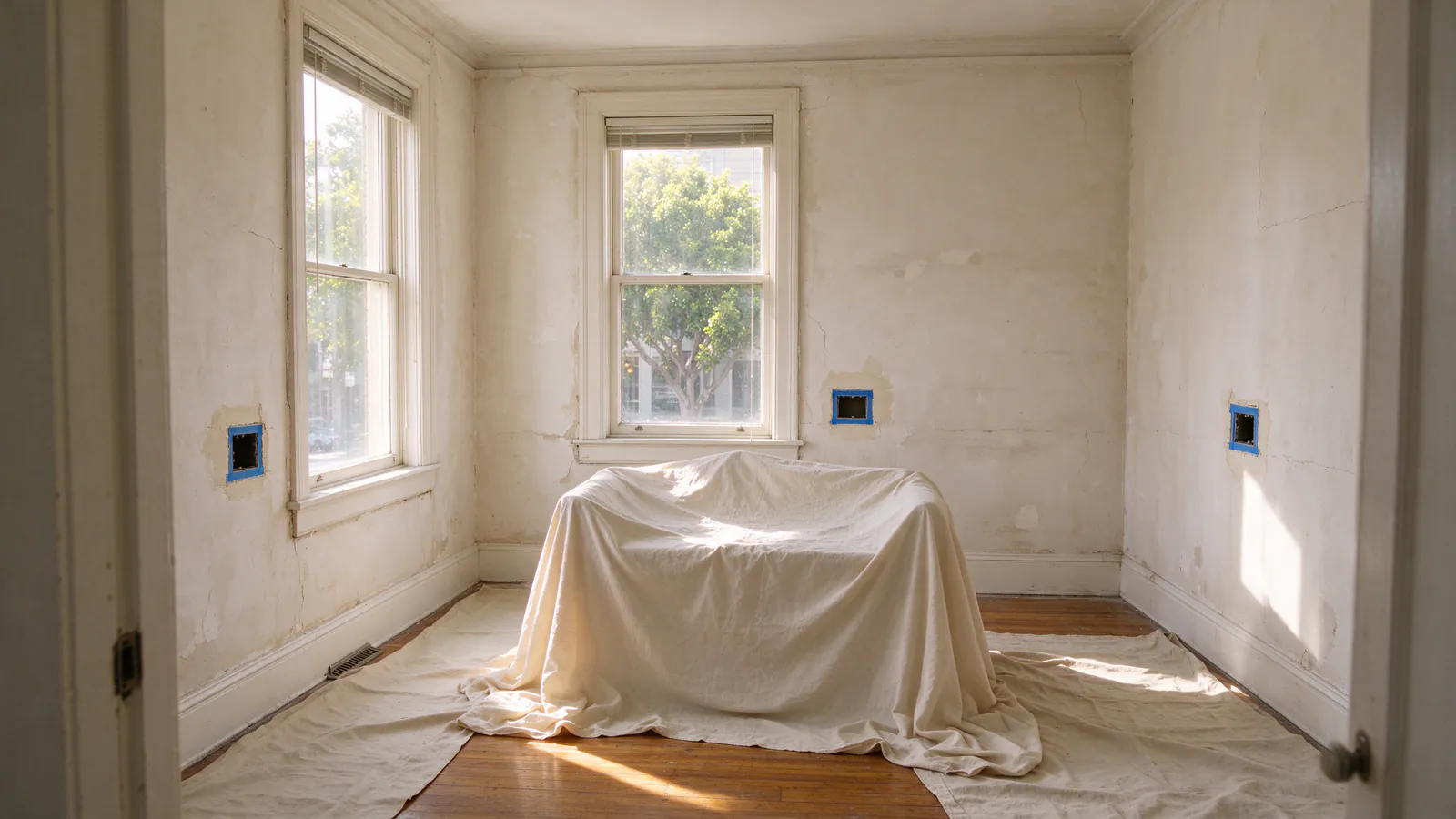
There is no single number. How long a knob and tube replacement takes depends mostly on how many circuits are still live, how easily new cable can reach them, and whether a panel or service upgrade joins the job. The wiring is only one stage: DBI inspections, plaster patching after the pre-cover sign-off and any PG&E work all sit on the same calendar.
Fog City SF Knob and Tube manages knob and tube replacement in San Francisco and the East Bay, with the electrical work carried out by licensed and insured California C-10 electrical contractors. This guide breaks the schedule into its stages, shows which waits come from public rules, and explains what makes two similar houses take very different amounts of time.
The stages of a replacement
A replacement moves through the same stages whatever the size of the house. What changes is how long each one runs.
| Stage | What happens | What sets its length |
|---|---|---|
| Walk-through | Every circuit is tested and traced; access routes are noted | Number of circuits, attic and basement access, how many wiring eras are mixed |
| Scope and price | A written scope lists each circuit, each opening and who closes it | How quickly decisions are made on added circuits, panel work and finishes |
| Permit | A DBI electrical permit is filed on PermitSF, one per existing dwelling unit except in single-family R-3 buildings | Number of units; whether a building permit or Planning review is also needed |
| Rough wiring | New cable is routed and boxes are set; old circuits are cut over in sequence | Access, plaster and finished ceilings, rooms cleared or furnished, occupied units |
| Pre-cover inspection | DBI inspects before anything is closed | 24 hours’ notice; corrections and reinspection if needed |
| Patching | Openings are closed | Number and size of openings, plaster vs drywall, lead-safe containment |
| Final and Green Tag | DBI inspects the operating work and issues the Certificate to Connect Current | 24 hours’ notice; any service work and PG&E reconnection |
The replacement process guide describes each stage in detail. Here the focus is on what makes them longer or shorter.
What makes the wiring stage longer or shorter
Access
Where cable can travel without opening a wall matters more than any other factor. A Sunset or Parkside house with living space over a ground-floor garage often lets first-floor circuits be fed from the garage ceiling, which is quick. A post-1906 Mission flat building with a flat roof usually has no walkable attic, so top-floor ceiling circuits need fishing from below or small openings in finished ceilings, which takes longer. Attics with low clearance, finished basements and built-in cabinetry all slow the routing.
How many circuits are still live
A house where an earlier remodel already replaced most circuits may need only a few runs, which is a partial replacement and a much shorter job. A house that is mostly original, or one where old and new circuits are spliced together inside walls, needs every circuit traced and replaced. The knob and tube mixed with Romex guide explains why mixed systems take longer to untangle than purely original ones.
Plaster and finishes
Plaster on wood lath takes more care to open and close than drywall. Where walls are plaster, openings are kept small and placed at boxes and the tops and bottoms of cavities, which takes time at both ends of the job. Picture rails, decorative ceilings and wainscoting add more. Plaster-wall rewiring covers the methods.
Lead-safe work
DBI presumes buildings built before 1979 contain lead paint unless a certified inspector shows otherwise. Its lead-safe guide calls for notifying neighbors at least three business days before work, posting a 32 by 24 inch “Lead Work in Progress” sign, containing dust and avoiding uncontained dry sanding. Setting up and clearing containment around each opening adds time, especially in rentals. The lead and asbestos guide explains what applies.
Occupancy
An empty house can be worked room after room. An occupied one is sequenced so most rooms have power at night and the rooms being worked are covered and closed off, which adds setup and cleanup each day. In multi-unit buildings, scheduled power-off windows are announced to residents in advance, and San Francisco requires a separate electrical permit for each existing dwelling unit, so buildings are usually phased unit by unit. The living at home guide covers what daily life looks like.
Inspections and the waits that come from rules
Some parts of the schedule are set by public rules rather than by the work.
DBI inspections. San Francisco’s electrical code requires a pre-cover inspection before any wiring is covered or concealed and a final inspection with the work operating, and asks for 24 hours’ notice for each inspection request. The first reinspection after a correction is free; later ones are charged, currently $259 per half hour. Energizing the new work requires the Certificate to Connect Current, the Green Tag. The San Francisco electrical permit guide covers the permit side.
Patching after the sign-off. DBI can order concealed, uninspected work exposed at the owner’s expense, so openings stay open until the pre-cover inspection passes. Patching is a stage of its own, which the patching guide explains.
Historic districts. Interior rewiring in an Article 10 landmark district needs no Planning review. An exterior change visible from the street, such as a new service mast or meter, is an exterior alteration and may need a Certificate of Appropriateness, which can add time to a service upgrade.
When a panel or service upgrade joins the job
A new panel on the existing service can usually be done within the rewiring schedule. A service upgrade adds a second organization. PG&E handles new load through an application, says its load assessment can take up to 30 days, and requires full payment before it starts construction or installs a meter. After the city inspector approves the work, PG&E says it typically reconnects within one day. San Francisco also requires new service-entrance conductors to run in conduit, not cable.
Most of the interior wiring can proceed while PG&E’s process runs, but the service changeover itself waits for both. Exterior service work is also the stage most exposed to weather: about 19 of San Francisco’s roughly 23 inches of normal annual rain falls from November through March, which can push mast and roof-side work by days. The panel upgrade vs rewiring guide explains when a service upgrade is actually needed, and the electrical panel upgrade page covers the work.
How long would your house take?
Routes and live circuits set the schedule, and both are mapped at the walk-through, where every circuit is tested.
How long an electrical inspection takes
The walk-through that starts a project, and a stand-alone knob and tube inspection, take longer in a house with many circuits, several wiring eras and attic or basement spaces to examine. What makes them slow is the circuit tracing: each breaker or fuse is identified and followed to what it feeds, and active knob and tube is separated from abandoned runs and later wiring. A DBI inspection of finished work is a separate visit, booked with 24 hours’ notice, and its length depends on how much work is being inspected.
How to keep the job moving
Most delays are decisions, not wiring. A few things help:
- Decide on added circuits, outlet locations and any panel work before the permit is filed, so the scope does not change midstream.
- Clear the attic hatch, basement walls and closets that give access to framing.
- Settle the finish level for patching up front, and who paints, so the last stage does not stall.
- In rentals, give tenants notice early and plan any relocation before the start date; the rental property guide covers the San Francisco rules.
- If BayREN’s rebate is part of the plan, collect the paperwork as you go; the rebate guide lists what it needs.
Getting a schedule for your house
A realistic timeline comes from the circuit map and the route plan, not from the age or size of the house. Once both exist, the written scope shows each stage, each opening and who closes it, and whether PG&E is involved at all. A schedule for your house starts with a call to (628) 296-7628 or an estimate request giving the number of units, whether the house has an attic or garage below, and what prompted the project. The cost estimator gives a first budget number without a call.