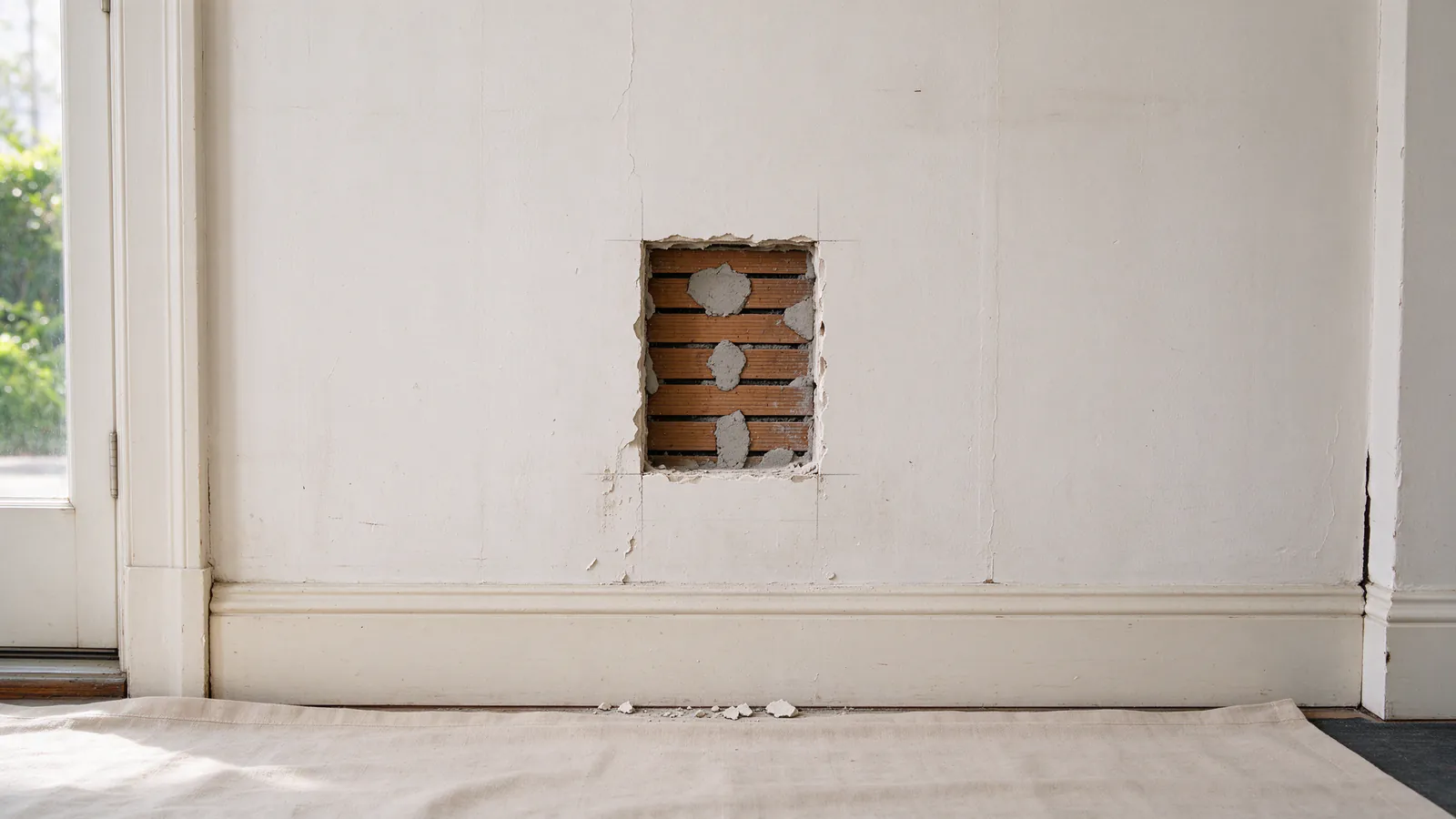
Knob and tube wiring is not usually made with asbestos. Its conductors are copper with rubber insulation under a woven cloth covering, and the porcelain knobs and tubes are ceramic. The concern is the old-house materials the wiring runs through or near, some of which can contain asbestos, and the paint on the walls being opened, which in older San Francisco buildings is presumed to contain lead.
Fog City SF Knob and Tube manages knob and tube replacement in San Francisco and the East Bay, with the electrical work carried out by licensed and insured electrical contractors. This guide explains why a rewire raises these questions, which materials deserve testing before anyone cuts into them, and how lead-safe rules shape the way openings are made, cleaned and patched.
What knob and tube is made of
The system has three kinds of material. The conductors are copper wire. Around each conductor is a layer of rubber insulation, and over the rubber a woven cotton cloth covering that has usually darkened with age. The knobs and tubes are porcelain, a fired ceramic. At transitions into boxes and fixtures, the wire was often slipped into loom, a flexible woven tubing.
None of that is asbestos by design, which is the direct answer to the question in this guide’s title. The knob and tube wiring guide explains how those parts work together, and the identification guide shows what they look like.
Where asbestos questions do come up
The reason asbestos comes up during rewiring is that a rewire touches more of a house than the wire. Openings are cut in walls and ceilings, cable is fished through cavities, and attic and basement spaces are worked in. The EPA’s list of where asbestos may be found in homes includes several materials a rewire can reach:
- Textured paint and patching compounds used on walls and ceilings, which is what an opening in an old ceiling cuts through.
- Attic and wall insulation containing vermiculite, a loose, pebbly fill, which also matters for the attic insulation service.
- Hot water and steam pipes coated with asbestos material or wrapped in asbestos blanket or tape, which a basement cable route can pass close to.
- Oil and coal furnaces with asbestos insulation, and walls and floors around wood-burning stoves protected with asbestos paper, millboard or cement sheets.
- Vinyl floor tiles and the backing on sheet flooring, where a floor has to be lifted for a route.
Knob and tube conductors are not on that list. The EPA notes that exposure comes from disturbing or damaging such material, and that you generally can’t tell whether a material contains asbestos by looking at it unless it is labeled. Its advice is to have a trained and accredited asbestos professional take samples for analysis, not to sample on your own, and to treat a material in doubt as if it contains asbestos and leave it alone. If a test is positive, the openings or removals that would disturb it are handled under the rules that apply to asbestos-containing material, by people qualified for that work, and the scope should say who does it and how the electrical routes change to avoid it where possible.
Lead paint touches more of the work
Lead paint reaches more of a San Francisco rewire than any one asbestos material does, because almost every opening goes through paint. The Census Bureau counts 45.2% of San Francisco’s housing units as built in 1939 or earlier, well inside the age range the lead rules address.
San Francisco’s presumption
DBI’s Lead-Based Paint Safety Guide states that buildings built before 1979 are presumed to contain lead paint unless a certified inspector proves otherwise. Its practices for work that disturbs that paint include:
- Notifying neighbors at least three business days before work starts.
- Posting a 32 by 24 inch “Lead Work in Progress” sign.
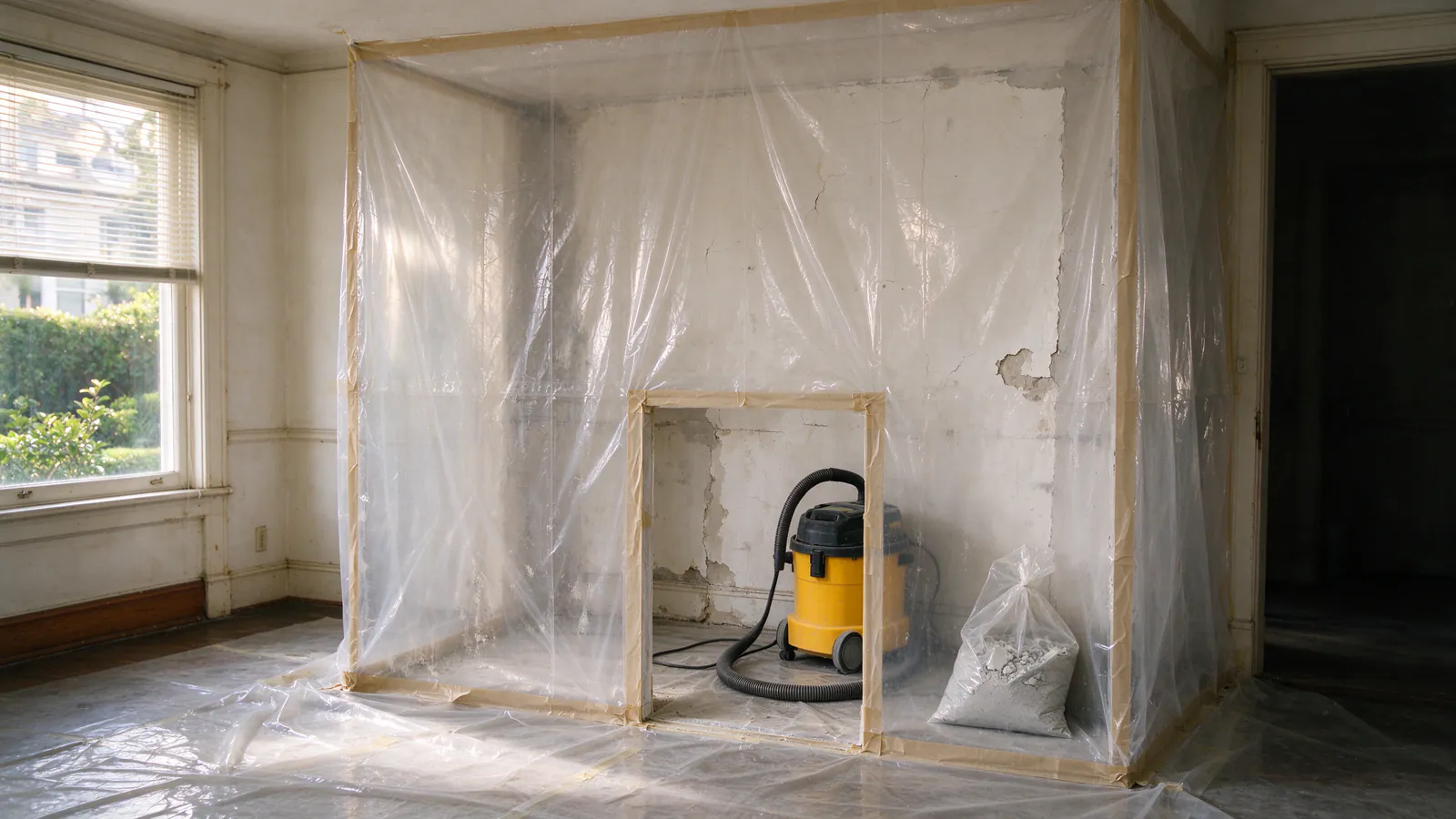
- Restricting access to the work area and containing dust with plastic sheeting and barriers.
- No dry sanding or dry scraping without containment, and no open-flame paint removal.
- Thorough cleanup when the work is done.
Non-compliance can bring a Notice of Violation, fines or a stop to work. Exactly which interior work the city’s rules reach depends on the building and how it is occupied, so the application to a given building is confirmed per job; the practices themselves are the sensible way to open painted plaster in any older house.
The federal rule
The EPA’s Renovation, Repair and Painting rule has applied since April 22, 2010. Firms paid to do work that disturbs paint in homes and child-occupied facilities built before 1978 must be certified, use certified renovators and follow lead-safe work practices, and give occupants pre-renovation education. The rule expressly covers electrical work. It exempts minor repair work that disturbs 6 square feet or less of painted surface per room inside, or 20 square feet outside, but a rewire’s openings in one room can add up past that, so the count is worth making per room in the plan.
In the East Bay
Oakland requires a Lead-Based Paint permit when a project disturbs paint on a building built before 1978, with a Lead Hazards Work Plan uploaded with the permit, a pre-work inspection and a completion self-certification at final. Its exemptions follow the federal minor-repair thresholds, and only certified workers may remove or control lead hazards there. Rules for Berkeley and other East Bay cities are confirmed per address.
Rewiring painted plaster in an older house?
The written scope lists each opening by room, so the lead-safe steps and the patching are planned before the first cut.
How lead-safe practice changes the work
Lead-safe practice does not change what gets wired; it changes how openings are made and cleaned up.
Fewer, planned openings. Routing new cable through the attic, basement and garage first, and cutting only where a cavity is blocked, keeps the painted area disturbed to a minimum. That is the approach the plaster-wall rewiring service is built on, and it is why the number and location of openings belong in the written scope.
Containment at each opening. Each work area is sealed with sheeting, floors are covered and the doorway is closed off. Dust is collected as it is made rather than swept up later.
Cleaning before moving on. The work area is cleaned before the barrier comes down, so dust is not carried into the next room.
Patching under the same rules. Closing an opening in painted plaster means scraping and smoothing around it, which disturbs paint again. In the written scope and price from Fog City SF Knob and Tube, plaster patching is its own itemized line. Paint is a separate decision, and the do electricians patch walls guide explains how restoration is usually divided between trades.
What it means for you at home
For a household living through a rewire, lead-safe practice mostly means staying out of contained rooms, leaving barriers in place and keeping children and pets away from the work area until it has been cleaned. The living at home during rewiring guide covers the day-to-day side, and the replacement process guide shows where in the sequence openings are cut, inspected and closed.
Lead-safe steps add time and material to each opening, which is one of the cost drivers listed in the cost guide. They do not change whether knob and tube should be replaced; the danger guide covers that question on its own terms.
If you have test results, an older inspection report or a material you are unsure about, mention it when you call (628) 296-7628 or request an estimate, along with the age of the house.