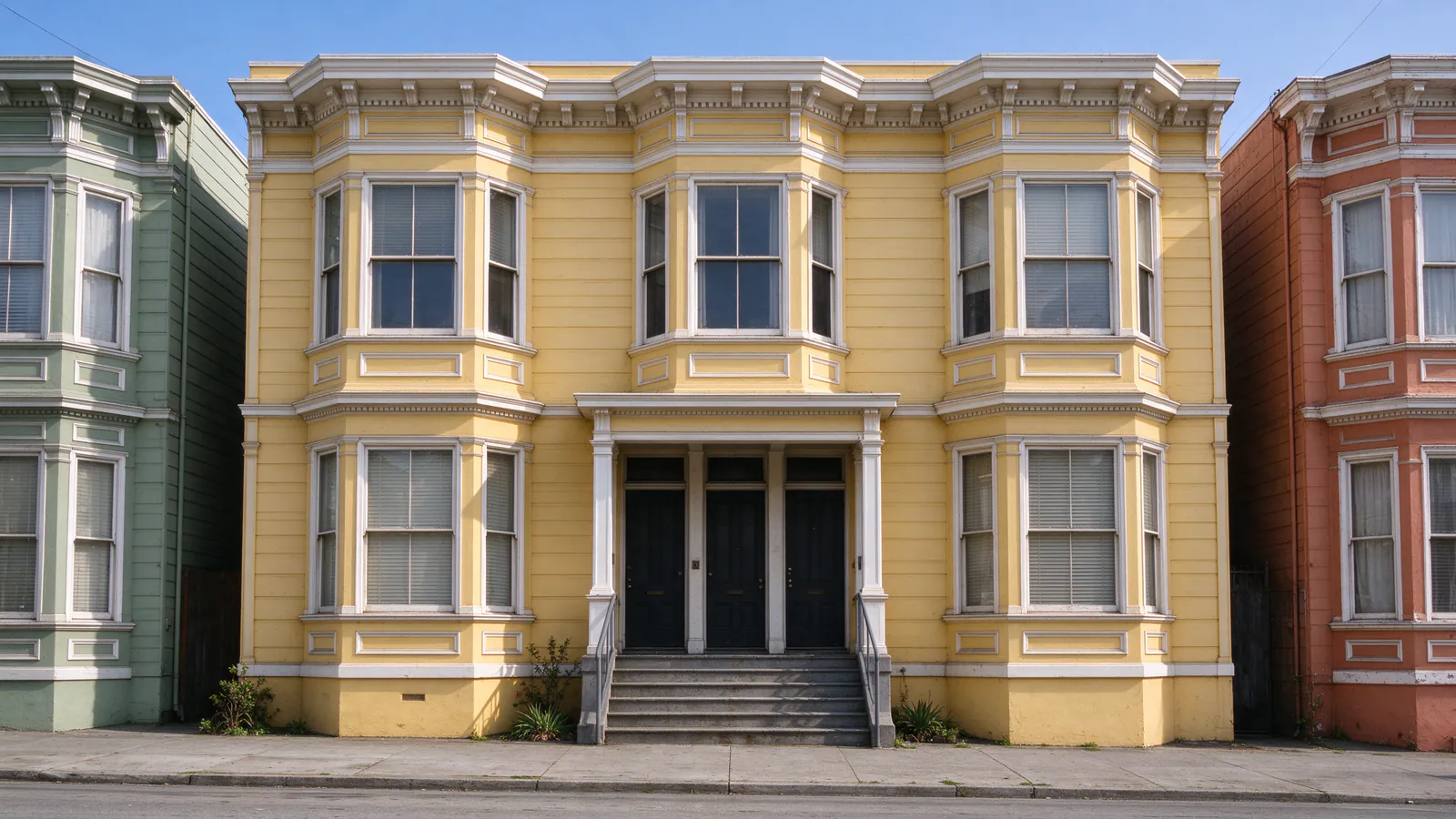
Fog City SF Knob and Tube replaces knob and tube wiring in the Mission District, Liberty Hill and Bernal Heights, working under San Francisco DBI permits, with the electrical work carried out by licensed and insured electrical contractors. In the Mission the usual question is not whether a house has old wiring but how to rewire a building full of people: a stack of flats, each its own dwelling unit, most of them rented.
The demand is visible in the permit record. ZIP code 94110, which covers the Mission and Bernal Heights, had 209 electrical permits naming knob and tube from January 2016 to October 2026, more than any other San Francisco ZIP. Across the city, the full scope of knob and tube replacement is the same; what changes here is the building, the tenancy and, on a few blocks, the historic district.
What makes a Mission rewire different
A Mission rewire is usually a multi-unit job. Each existing dwelling unit needs its own DBI electrical permit, occupied units have to be phased, and San Francisco’s Rent Board rules apply if a tenant must leave. In Liberty Hill and two newer districts, exterior service changes can also need historic review.
Post-fire flats and Romeo flats
Most of what stands in the Mission was built in one burst. SF Planning’s Inner Mission North context statement finds that only a small portion of the buildings predate April 1906 and that the overwhelming majority date from 1906 to 1930, after the fire burned south from Mission Dolores as far as 20th Street. That rebuild happened while knob and tube was still the standard way to wire a home, and it produced flats: two- and three-flat buildings, and Romeo flats of usually four or six units, which the same study calls a form of high-density rental housing. It also notes that residential construction after 1906 favored flat roofs with a tar-and-gravel surface. Where a building has that kind of roof, there may be no walkable attic over the top flat, so its ceiling circuits have to be fished from the walls or reached from above in a different way, while the lower units are often reached from the garage or basement ceiling. The plan for a Mission flat building starts with that vertical question: which unit’s circuits run through which other unit’s walls.
Tenants, permits and lead-safe work
Census figures show 56.6% of Mission housing units were built before 1940, and 65.9% of the occupied pre-1940 units are rented. That makes three rules part of almost every job. DBI requires a separate electrical permit for each existing dwelling unit outside R-3 occupancies, so a six-unit building means six permits and six sets of inspections. If work requires a tenant to leave temporarily for capital improvement work, the Rent Ordinance requires the landlord to file with the Rent Board within ten days of serving notice and to pay relocation expenses. Whether a rewire counts as a capital improvement for a passthrough petition is a Rent Board question for each building; the rental property guide covers how those petitions work. And because DBI presumes buildings built before 1979 contain lead paint, openings in plaster follow lead-safe practice, with neighbor notice and a posted sign where DBI’s rules apply. The lead and asbestos guide explains what that adds to a job.
Liberty Hill, Chula-Abbey and Alert Alley
The Mission holds three of San Francisco’s Article 10 residential historic districts: Liberty Hill, designated in 1985, and Chula-Abbey Early Residential and Alert Alley Early Residential, both designated on February 13, 2026. DBI’s permit data puts 13 knob and tube permits filed since 2016 inside Liberty Hill, more than any other historic district in the city, and 5 inside Chula-Abbey. The rule that matters is narrow. Planning Code exempts interior alterations from Certificate of Appropriateness review, so rewiring inside the house needs no historic approval. A service upgrade is different when it adds or moves a mast, meter or conduit on a facade visible from the street, because that is an exterior change. Planning offers an administrative Certificate for minor alterations, and whether a given service change qualifies is confirmed with Planning per address before the panel upgrade is scheduled.
How a Mission job usually runs
The first call settles the basics: how many units, who lives in each, whether the owner lives in the building, and what started it, often an insurer or a sale. The walk-through then tests the circuits unit by unit and follows them between floors, because a lower flat’s ceiling often carries wiring for the flat above. Basement, garage and roof access are checked, along with the panel or meter bank and whether the building is on DBI’s soft-story list.
The scope that follows is written per unit. Permits are filed for each dwelling unit, and the work is sequenced so each unit loses power only for set periods, with the schedule shared with residents in advance. Each unit gets its own pre-cover inspection before walls close and its own final inspection and Green Tag. Retired runs are disconnected at both ends, and each unit gets a circuit record of what was replaced and what, if anything, stays. Apartment building rewiring covers the phasing in more detail, and plaster-wall rewiring covers how openings are kept small.
Rewiring a Mission flat building?
Start with a unit-by-unit test of what is still live, and a permit and phasing plan built around the people living there.
Bernal Heights
Bernal Heights sits in the same ZIP but reads differently on paper. Census figures show 61.9% of its housing units were built before 1940, yet only 28.9% of the occupied pre-1940 units are rented, and the neighborhood holds 3,134 owner-occupied pre-1940 single-family homes. DBI’s records show 76 permits naming knob and tube filed in Bernal Heights from January 2016 to October 2026, and the soft-story list includes 46 properties there, far fewer than the Mission’s 622.
That changes the decisions. Where a Bernal house is a stand-alone single-family home and the owner’s primary residence, the owner could take out a homeowner electrical permit, though DBI requires the owner to do the work personally and can still send them to a licensed contractor. A single-family home is also the kind of building BayREN’s EASE Home program covers, with up to $2,000 toward fixing active knob and tube for income-qualified PG&E customers as part of a weatherization project; the BayREN rebate guide has the conditions. Fog City SF Knob and Tube helps with the rebate paperwork, and the electrical contractors who do the work supply the electrician’s invoice and the inactivity certification the program asks for; BayREN decides eligibility and the amount. Building forms vary across the hill, so attic height, crawlspace depth and garage access are checked house by house rather than assumed. A knob and tube inspection is often the first step when an insurer has asked.
Insurance pressure in 94110
California FAIR Plan figures show residential policies in force in 94110 rising from 61 in September 2021 to 196 in September 2025, the second-highest count of any San Francisco ZIP. The figures give no reason for any policy, so on their own they say nothing about wiring. What is documented is that Bay Area brokers have told reporters that knob and tube on an application can mean a decline. A written record of which circuits were replaced, and an electrical inspection for insurance, give an underwriter something specific, though the insurer still decides.
For costs, the San Francisco cost guide explains the ranges, and the permit guide walks through DBI’s process. Other neighborhoods are listed on the service areas page.